
bulava
Codex supervises Claude Code on your Mac, on the subscriptions you already pay for. You describe the work; it comes back reviewed.
Install with your AI
Paste into Claude Code, Cursor, or any agent — it reads the repo and wires the tool into your project.
Install and set up bulava (git-clone project) into my current project.
Found on https://claudeers.com/bulava
Repo: https://github.com/Stepanokdev/bulava
Homepage/docs: https://bulava.app
Detected install method: git-clone → git clone https://github.com/Stepanokdev/bulava
Category: other. Platforms: cli, api, web, mobile.
Read the repo's README for exact setup and env vars, then install it and wire it into my project.

Claudeers Health Verdict:
unknown; community-verified: false. Confirm the source before running anything.
git clone https://github.com/Stepanokdev/bulava
// compatibility
| Platforms | cli, api, web, mobile |
|---|---|
| Operating systems | — |
| AI compatibility | claude |
| License | NOASSERTION |
| Pricing | open-source |
| Language | Swift |

Bulava
Stop babysitting AI.
Claude Code writes, Codex reviews, and neither of them asks you to press continue.
Download for macOS · Install the CLI · How it works · The benchmark
Bulava runs Claude Code and the Codex CLI on your Mac, on the subscriptions you already pay for. You describe the work; Claude does it, Codex reviews it independently and sends it back until it is actually done. There is no account to create, no API key to paste, and no server of ours in the path: everything happens on your machine, in your folders.
It started as a shell script whose whole purpose was to stop a model announcing "I have done 30% of the work — shall we leave it here?" and then asking a human to say no. Ninety-odd days later it is the application that writes itself.
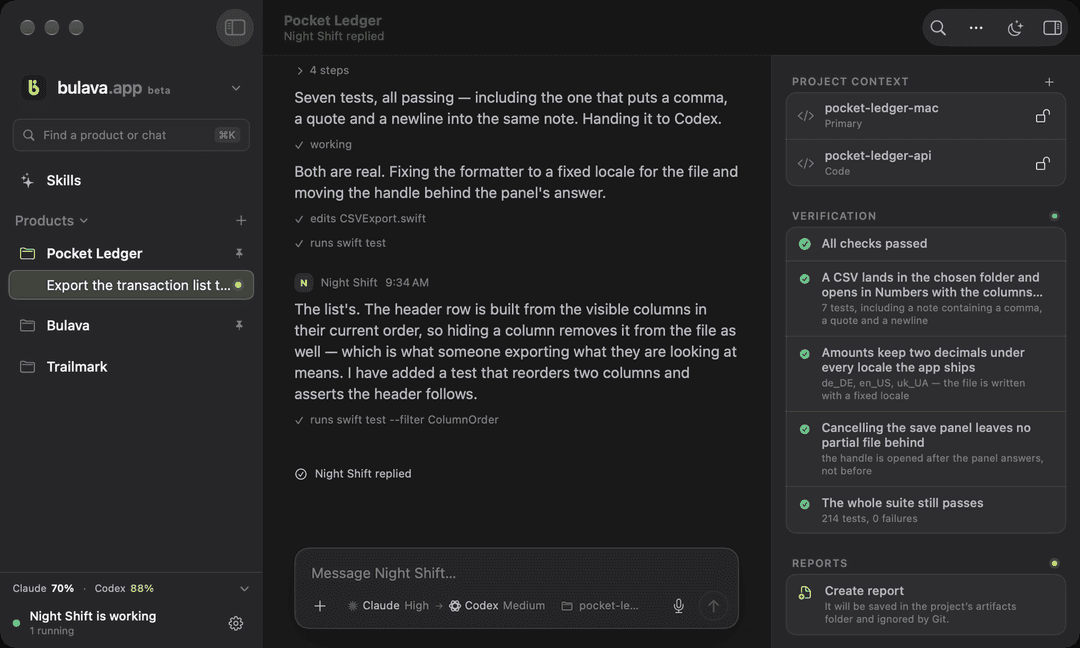
One window. Products on the left, the agent's real transcript in the middle, and what you can act on — changes, evidence, reports — on the right.
One message, and everything that happens to it
This is the arrangement the release on bulava.app runs. Every stage below is
traceable to a file: the stage list to engine/supervisor/pipelines/adaptive-peer.json, the branch
at the top to engine/bin/preflight.sh, the numbers on the review loop to
engine/supervisor/config.sh.
flowchart TD
    MSG([Your message — typed, dictated or dropped in as a file]) --> Q1{A follow-up to the open<br>task, or a new one?}

    Q1 -->|a follow-up| CHEAP[The cheap context<br><i>the thread's brief and the task's own material:<br>no classification, no research, no design precedent</i>]
    Q1 -->|a new task| CLASSIFY[Classification<br><i>scale · does it need a plan ·<br>does it need research · does it touch an interface</i>]

    CLASSIFY --> ASK[Ask Codex<br><i>only when the classification is unclear</i>]
    ASK -->|only if it touches an interface| DESIGN[Design precedent<br><i>how comparable products solved this,<br>and where each pattern breaks</i>]
    ASK -->|only if the classification asked for it| RESEARCH[External research<br><i>checked facts with sources,<br>not recollection</i>]

    CHEAP --> CTX[One shared context file<br><i>both models read the same bytes</i>]
    DESIGN --> CTX
    RESEARCH --> CTX

    CTX -->|at the same time| PC[Claude: an independent position]
    CTX -->|neither sees the other| PX[Codex: an independent position]
    PC --> ALIGN[Codex reconciles the two positions<br><i>material disagreements, and what would settle each</i>]
    PX --> ALIGN

    ALIGN --> WORK[Claude decides and implements<br><i>the decision is Claude's; the reconciliation is advice, not authority</i>]

    WORK -->|it cannot go on| STOP([Blocked, or a decision only you can take —<br>it stops here and asks you])
    WORK -->|the work goes on| CONSULT[Consultation with Codex<br><i>as many times as the work needs</i>]

    CONSULT --> REVIEW[Stop hook: Codex reviews<br><i>this task only — the real diff, the evidence, the acceptance criteria</i>]
    REVIEW --> Q2{What the review returned}
    Q2 -->|accepted| DONE([Accepted, and the report is waiting for you])
    Q2 -->|findings| FIX[Claude fixes what was named]
    FIX --> REVIEW
The loop has limits, and they are the point: three rounds of patience, two rounds without progress parks the run for a person, a ceiling of twelve rounds becomes review debt, eight hours of rounds parks it too. Nothing is accepted because an agent said it was done.
The three arrangements this one replaced — and what each of them got wrong — are drawn out at bulava.app/pipeline/.
How much better is this than Claude Code on its own?
That is the question the benchmark measures, and the only honest way we found to answer it: give the same task to Claude Code alone and to Bulava, and compare what comes out.
On 7–8 September the task was to rebuild a mobile game from a video of somebody playing it, and nothing else — no hints afterwards, no corrections, no second prompt. It ran three ways:
| Claude Code alone | Claude + a review | Two independent positions | |
|---|---|---|---|
| Time on the task | 3.7 h | 4.2 h | 1.5 h |
| Tokens processed | 389.0 M | 155.6 M | 34.3 M |
| Claude's reasoning effort | xhigh | high | high |
| What came out | ≈13 bugs, by eye | ≈7 bugs, by eye | 0 broken mechanics |
| Its own tests | 12 / 12 | verify.sh — PASS | 57 / 57 |
| Play the result | Kitten Manor | Muffin Manor | Cozy Cottage Match |
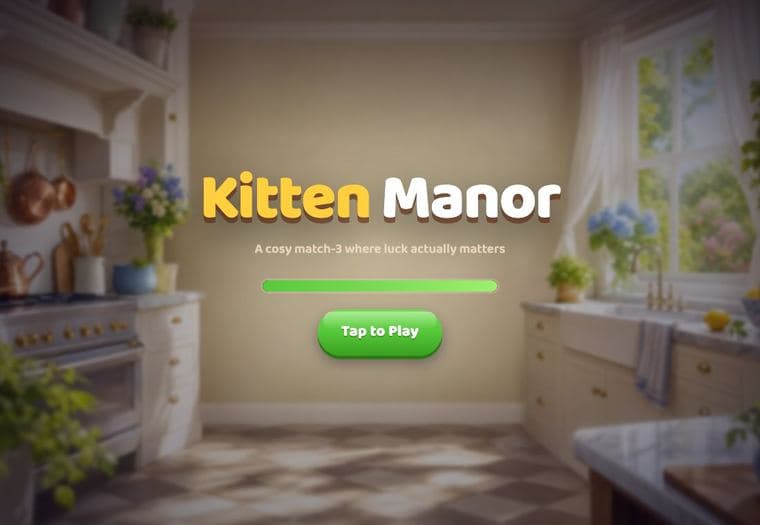
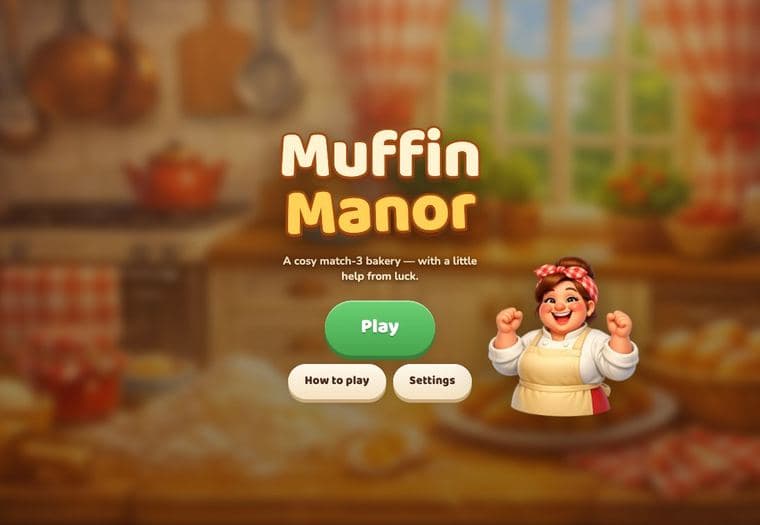
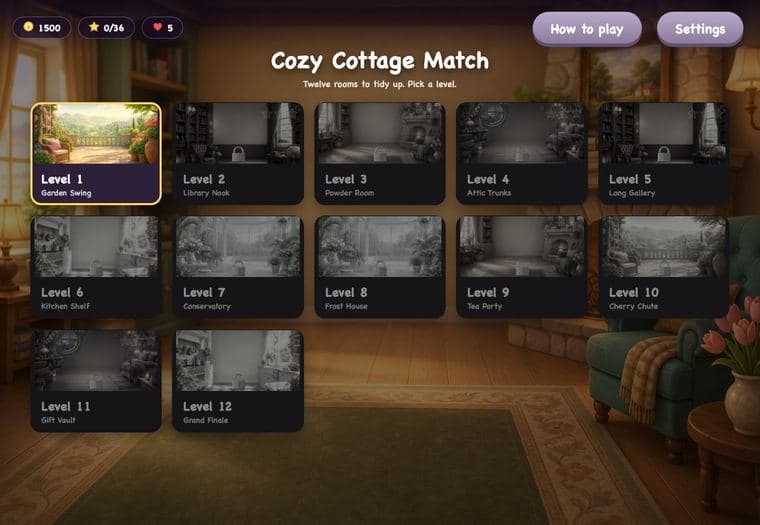
What these figures do not say. The bug counts are approximate and counted by eye, by the author, playing each game — they are not a test suite's verdict. The first run was given a higher reasoning effort than the other two, so it is not a like-for-like comparison of the same setting. The token counts are everything the models read, cache included: 97% of them were cache reads. One of the three addresses now serves a later build than the one that was measured, and the page says which. Measured 2026-09-17, from runs made 2026-09-07 — 2026-09-08; the prompt, the per-file digests and the procedure that produced them are published at bulava.app/benchmark.json, and the run-by-run methodology at bulava.app/pipeline/#methodology.
What is in this repository
Night Shift/ | the macOS app — SwiftUI, NavigationSplitView, a native .inspector |
engine/ | the work engine: sessions, the review gate, the verifier, the queue, the watchdog |
site/install.sh | the one-liner below, in full — the thing you would be piping into bash |
Night ShiftTests/, Night ShiftUITests/ | what proves it |
The app does not fork the engine's brain. It reads the engine's state from ~/.claude/supervisor
and drives the same night-shift / night-queue commands you can run by hand. One source of
truth, whichever way you come at it.
The website's own source and tooling are not here: they are the author's publishing pipeline for one address, with his server's paths in them, and nothing about them helps you run Bulava. The generated pages, the evidence file and the installer are served from bulava.app — and the installer is in this repository so that the command you are told to pipe into a shell can be read before you run it.
What it refuses to do
Each of these was built first, and each is now checked by something that runs.
- No invented progress. No percentage, no progress bar. A model usually knows what it has done and almost never knows what the next step will open; an invented 60% would be the most dishonest pixel in the app. A stage is marked when something on disk says so.
- No memory of you. Bulava kept a long-term memory of the director's decisions and it was the
most expensive thing ever removed from it. A situational request becomes a permanent law far too
easily, and the rules go stale and duplicate what the models already read from your
CLAUDE.md. Search over past sessions stayed; the system's opinion of you did not. - No silent reach. Connecting a folder is not consent to change it. A resource is read-only unless you mark it writable, and that is enforced when work is dispatched, not merely displayed.
- No servers of ours. The only thing the app fetches from us is the update feed.
What you need
- macOS 15.6 or newer, Apple Silicon or Intel. Building it needs Xcode 26.
- Claude Code and the Codex CLI on your
PATH, signed in on your own subscriptions. tmux,jq,git,python3. The app checks for these on first launch and offers to install them through Homebrew, with a button.
Run it from the terminal instead
The engine works on its own, with no app and no checkout:
curl -fsSL https://bulava.app/install.sh | bash
night-shift status
That script is site/install.sh in this repository, so you can read it first.
It installs into ~/.night-shift, links seven commands into ~/.local/bin, writes three slash
commands into ~/.claude/commands, and sets Claude Code's status line and worker hooks. It backs
up ~/.claude/settings.json before touching it. To take all of that back out:
night-shift uninstall
which leaves ~/.claude/supervisor — your queue, your run state, your reports — alone.
The app is still the recommendation, and not for marketing reasons. macOS grants screen recording and accessibility to a signed application, not to a shell script, so runs that have to photograph a user interface in order to prove they worked need Bulava running. Everything else works either way.
Build it yourself
open "Night Shift.xcodeproj"     # scheme: Night Shift
# or
xcodebuild build -scheme "Night Shift" -destination 'platform=macOS'
./.night-verify.sh               # build and the whole test suite
The app is not sandboxed. It has to spawn bash, git and tmux and read ~/.claude, which a
sandboxed app cannot do. This is a local tool that drives local CLIs, so that is the correct trade
rather than a corner cut.
The engine's own suite is pure bash and runs without the app:
bash engine/tests/run-all.sh # 81 suites; codex and claude are mocked through PATH
Where it keeps things
The engine owns ~/.claude/supervisor. The app keeps its own layer — your product registry,
captures, work items and conversations — in ~/Library/Application Support/NightShift. Deleting
that folder resets the app without touching the engine.
Each project folder maps to an engine instance by the slug the engine uses: the sanitized folder
name plus the first 12 hex characters of the SHA-1 of its canonical path. That is how a project you
added links to the worker running against it, its queue entries and its verifier evidence. It is
reproduced in Night Shift/Engine/Slug.swift and checked against live instances.
Honestly
This is a beta. It runs every day and it built itself, but the number of people using it who are not its author is small. Found a bug: [email protected].
Licence
FSL-1.1-ALv2 — the Functional Source License with an Apache 2.0 future grant. See LICENSE.
In plain words: read it, change it, run it, use it inside your company, teach and research with it. The one thing you may not do is sell a competing product or service built on it — another Bulava, under another name. Two years after each version is published, that version becomes Apache 2.0 and even that restriction lapses, which is the point: nothing here is locked away forever, and nobody gets to ship it as their own next week.
It is deliberately source-available rather than OSI open source, and it is worth being honest about the difference: an OSI-approved licence cannot forbid a competing rebrand, only require it to share its source. If that trade matters to you, the Apache-licensed versions are dated and coming.
The name Bulava, the mace mark and bulava.app are not covered by the licence. Fork the code, not the identity.
Third-party notices, including Sparkle's, are in NOTICE.md. Claude Code and the Codex CLI are not bundled, vendored or redistributed here; Bulava runs whatever copies are already on your machine.
Further reading in this repository: engine/ENGINE-README.md — what
the engine does between your message and the report, stage by stage.
// faq
What is bulava?
Codex supervises Claude Code on your Mac, on the subscriptions you already pay for. You describe the work; it comes back reviewed.. It is open-source on GitHub.
Is bulava free to use?
bulava is open-source under the NOASSERTION license, so it is free to use.
What category does bulava belong to?
bulava is listed under other in the Claudeers registry of Claude-compatible tools.
// embed badge

[](https://claudeers.com/bulava)
// retro hit counter

[](https://claudeers.com/bulava)
// reviews
// guestbook
// related in Other
 🔓
🔓 🔓
🔓Anti-AI-slop design skill for Claude Code, Cursor, and Codex.
 🔓
🔓Open source Ghostty-based macOS terminal with vertical tabs and notifications for AI coding agents. Built for multitasking, organization, and programmability.
 🔓
🔓Huashu Design · HTML-native design skill for Claude Code · Claude Code 里 HTML 原生的设计 skill · 高保真原型 / 幻灯片 / 动画 + 20 设计哲学 + 5 维评审 + MP4 导出 · Agent-agnostic