
Zengram
A Multi Agent Memory MCP That Connect Agents Across Systems and Machines
Install with your AI
Paste into Claude Code, Cursor, or any agent — it reads the repo and wires the tool into your project.
Install and set up Zengram (release-binary project) into my current project.
Found on https://claudeers.com/zengram
Repo: https://github.com/ZenSystemAI/Zengram
Homepage/docs: https://zensystem.ai
Detected install method: release-binary → inspect the README
Category: mcp-servers. Platforms: cli, api.
Read the repo's README for exact setup and env vars, then install it and wire it into my project.

Claudeers Health Verdict:
active; community-verified: false. Confirm the source before running anything.
Grab the latest release asset from GitHub.
# download a build from https://github.com/ZenSystemAI/Zengram/releases
git clone https://github.com/ZenSystemAI/Zengram
// compatibility
| Platforms | cli, api |
|---|---|
| Operating systems | — |
| AI compatibility | claude |
| License | MIT |
| Pricing | open-source |
| Language | JavaScript |
Zengram
Shared memory for multi-agent AI systems.
Quick Start • How It Works • Benchmarks • Adapters • API Docs • Config
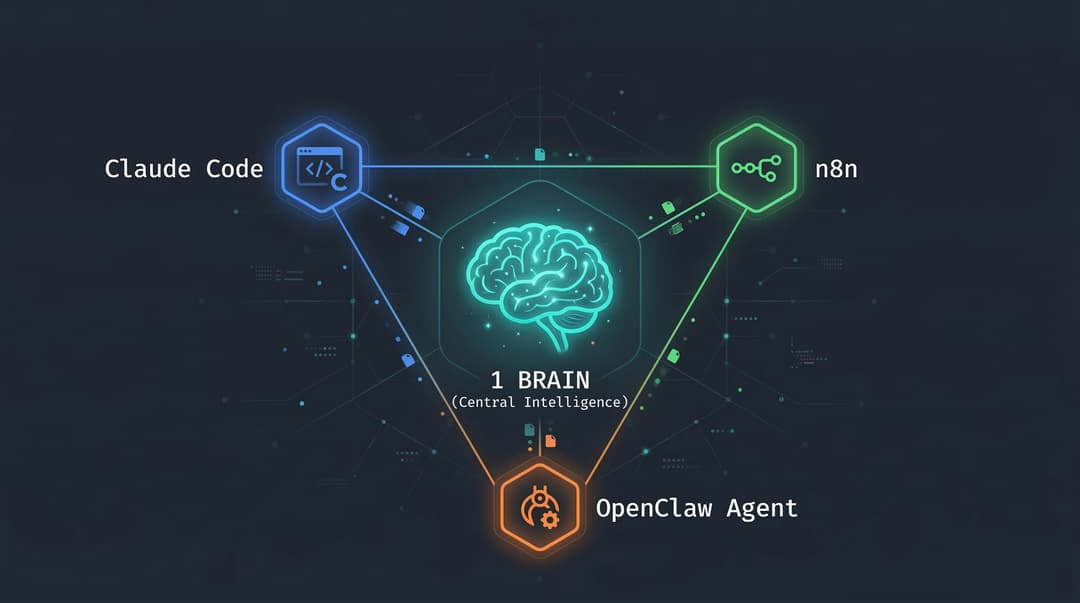
Store a fact from Claude Code on your laptop, recall it from an autonomous agent on your server, get a briefing from another session — all through the same memory system. Born from a production setup where nothing existed that let multiple AI agents share memory across separate machines.
The Problem
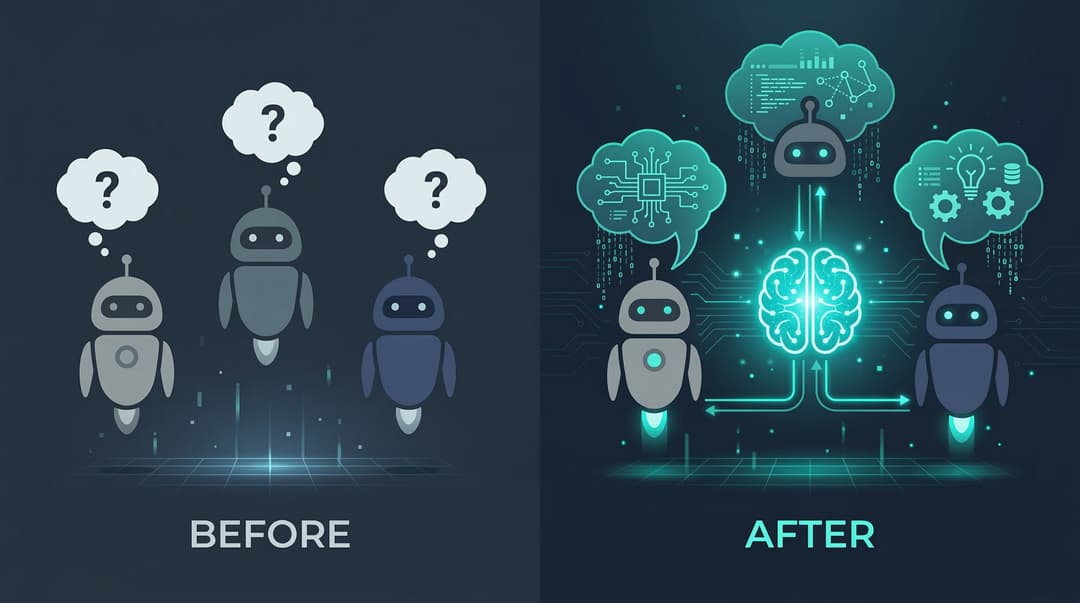
You run multiple AI agents — Claude Code for development, autonomous agents for tasks. They each maintain their own context and forget everything between sessions. When one agent discovers something important, the others never learn about it.
How It Works
Typed Memory

Events are immutable history. Facts upsert by key — new facts supersede old ones. Statuses track current state. Decisions record choices and reasoning. Each type has its own lifecycle, decay rules, and mutation semantics.
Unified Storage
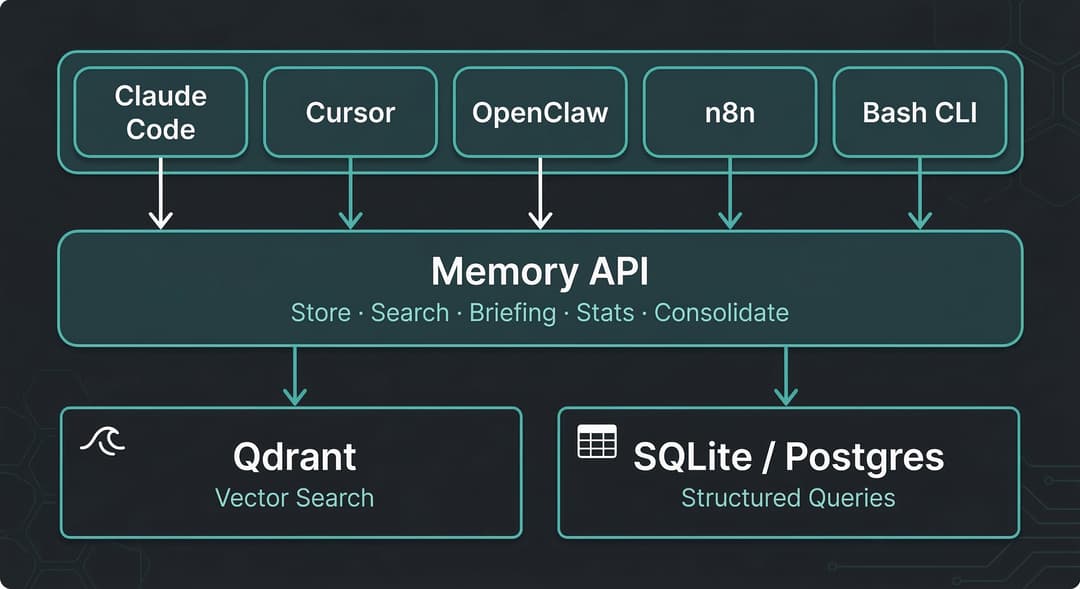
Every memory lives in a single Postgres database: pgvector (HNSW) for semantic vector search and structured tables for queries, entities, and full-text BM25 search. Get both "find memories similar to X" and "give me all facts with key Y" from the same system — one container, no separate vector service.
Multi-Path Search
Search runs two retrieval paths in parallel, fused with Reciprocal Rank Fusion:
- Vector search — Cosine similarity via pgvector (HNSW)
- Keyword search — BM25 via Postgres tsvector
Items found by both paths get boosted. 98.4% retrieval accuracy on LongMemEval.
Built for Multi-Agent
- Cross-agent briefings — "What happened since I was last here?" returns updates from all other agents
- Credential scrubbing — API keys, JWTs, passwords automatically redacted before storage
- Entity extraction — Regex + alias cache at write time
- LLM consolidation — Periodic background process merges duplicates, flags contradictions, discovers connections
Benchmarks
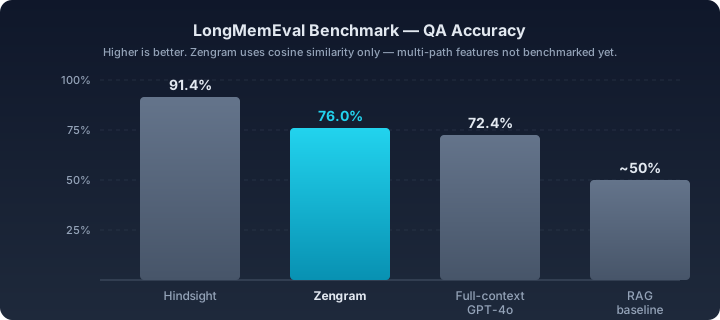
Evaluated on LongMemEval, the academic benchmark for long-term conversational memory:
| Score | |
|---|---|
| Retrieval accuracy (finding the right memories) | 98.4% |
| QA accuracy (GPT-4o answering from retrieved context) | 76.0% |
| Full-context GPT-4o (entire history in prompt, no retrieval) | 72.4% |
The benchmark uses cosine similarity only — none of the API's multi-path features (BM25, temporal boost) were used. Full methodology and per-category breakdown.
LongMemEval tests single-agent chat recall. Zengram is built for multi-agent coordination — features like cross-agent briefings, typed memory, entity extraction, and credential scrubbing aren't measured by this benchmark but are core to production use.
How It Compares
| Feature | Zengram | Mem0 | Letta | Zep | Hindsight |
|---|---|---|---|---|---|
| Cross-machine by design | Yes | Cloud only | No | Cloud only | No |
| Typed memory (event/fact/status/decision) | Yes | No | No | No | No |
| Multi-path search (vector+BM25) | Yes | Vector only | Vector only | Hybrid | Yes |
| Session briefings | Yes | No | No | No | No |
| Credential scrubbing | Yes | No | No | No | No |
| Entity extraction + linking | Yes | Graph (Pro) | No | Yes | No |
| LLM consolidation | Yes | Inline | Self-managed | No | Reflect |
| Temporal validity | Yes | No | No | Yes | No |
| MCP server included | Yes | Community | No | No | Yes |
| Self-hostable (fully open) | Yes | Community ed. | Yes | Graphiti only | Yes |
Quick Start
git clone https://github.com/ZenSystemAI/Zengram.git
cd Zengram

cp .env.example .env
# Edit .env — set BRAIN_API_KEY and your embedding provider key

docker compose up -d

# Verify
curl http://localhost:8084/health

# Store your first memory
curl -X POST http://localhost:8084/memory \
  -H "Content-Type: application/json" \
  -H "X-Api-Key: YOUR_KEY" \
  -d '{
    "type": "fact",
    "content": "The API uses port 8084 by default",
    "source_agent": "my-agent",
    "key": "api-default-port"
  }'
Adapters
MCP Server (Claude Code, Cursor, Windsurf)
13 tools: brain_store, brain_search, brain_briefing, brain_query, brain_stats, brain_consolidate, brain_entities, brain_delete, brain_update, brain_export, brain_import, brain_reflect, brain_research.
{
  "mcpServers": {
    "zengram": {
      "command": "node",
      "args": ["/path/to/zengram/mcp-server/src/index.js"],
      "env": {
        "BRAIN_API_URL": "http://localhost:8084",
        "BRAIN_API_KEY": "your-key"
      }
    }
  }
}
Or install via npm: npm install -g @zensystemai/zengram-mcp
Claude Code Skills
Copy adapters/claude-code/sessionend/ to your project's .claude/skills/ to get the /sessionend ritual — structured session reflections stored directly to Zengram. Full guide.
Bash CLI
- Bash:
./adapters/bash/brain.sh store --type fact --content "Server migrated" - Any HTTP client: Plain REST — full reference
Documentation
| Doc | Description |
|---|---|
| API Reference | Every endpoint with request/response examples |
| Architecture | System design, data flows, component inventory |
| Configuration | All environment variables |
| Data Model | Memory types, decay, dedup, supersedes logic |
| MCP Tools | The 13 MCP tools agents use |
| Operations | Deployment, monitoring, failure modes |
| Benchmarks | Full LongMemEval methodology and results |
| Examples | curl demo, Python client |
Roadmap
Recently shipped: agentic iterate-until-sufficient retrieval (brain_research) with grounded [mem:<id>] citations, pgvector migration (single-Postgres storage), multi-collection support, on-demand LLM reflection, temporal validity, multi-path RRF search (vector + BM25) — full changelog
Coming next: Automatic memory capture, hosted docs, LangChain/LlamaIndex integration
Contributing
Contributions welcome! See CONTRIBUTING.md.
See Also
- OpenClaw Memory Toolkit — Long-term memory for OpenClaw agents.
License
MIT — see LICENSE.
Built by ZenSystem AI
// faq
What is Zengram?
A Multi Agent Memory MCP That Connect Agents Across Systems and Machines. It is open-source on GitHub.
Is Zengram free to use?
Zengram is open-source under the MIT license, so it is free to use.
What category does Zengram belong to?
Zengram is listed under mcp-servers in the Claudeers registry of Claude-compatible tools.
// embed badge

[](https://claudeers.com/zengram)
// retro hit counter

[](https://claudeers.com/zengram)
// reviews
// guestbook
// related in MCP Servers
 🔓
🔓f.k.a. Awesome ChatGPT Prompts. Share, discover, and collect prompts from the community. Free and open source — self-host for your organization with complete…
 🔓
🔓A cross-platform desktop All-in-One assistant for Claude Code, Codex, OpenCode, OpenClaw, Gemini CLI & Hermes Agent. Only official website: ccswitch.io
 🔓
🔓🪨 why use many token when few token do trick — Claude Code skill that cuts 65% of tokens by talking like caveman
 🔓
🔓An open-source AI agent that brings the power of Gemini directly into your terminal.