
operon
AI-powered IDE for bioinformatics — built by biologists, for biologists
Install with your AI
Paste into Claude Code, Cursor, or any agent — it reads the repo and wires the tool into your project.
Install and set up operon (git-clone project) into my current project.
Found on https://claudeers.com/operon
Repo: https://github.com/swaruplab/operon
Homepage/docs: https://swaruplab.bio.uci.edu/operon
Detected install method: git-clone → git clone https://github.com/swaruplab/operon
Category: devops. Platforms: cli, api, desktop, web.
Read the repo's README for exact setup and env vars, then install it and wire it into my project.

Claudeers Health Verdict:
active; community-verified: false. Confirm the source before running anything.
git clone https://github.com/swaruplab/operon
// compatibility
| Platforms | cli, api, desktop, web |
|---|---|
| Operating systems | — |
| AI compatibility | claude |
| License | MIT |
| Pricing | open-source |
| Language | Python |
Operon
AI-powered IDE for bioinformatics — built by biologists, for biologists.
Operon is a cross-platform desktop application that brings together an AI coding assistant (Claude), integrated terminal, code editor, file browser, and remote-server access into a single tool designed for computational biologists. Whether you're running RNA-seq pipelines on an HPC cluster from your Windows laptop, analyzing single-cell data on a Linux workstation, or writing scripts on a Mac, Operon gives you a professional development environment with AI that understands your domain.
Download • Documentation • Release notes
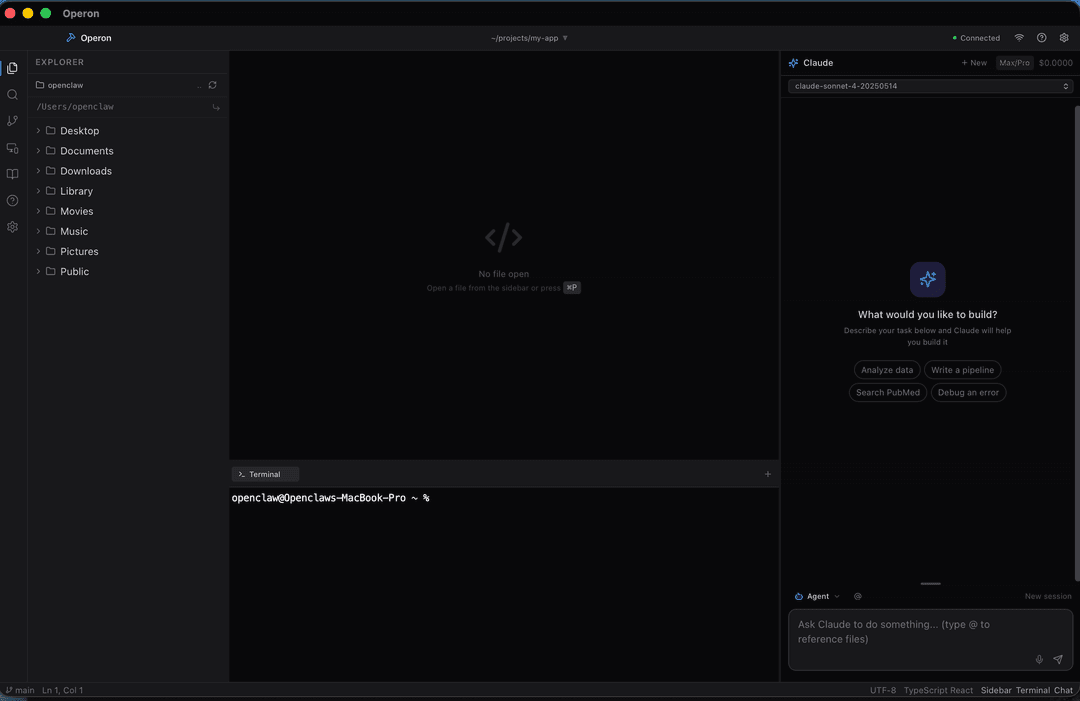
Why Operon?
Most IDEs are built for software engineers. Operon is built for you — the biologist who writes Python scripts to process sequencing data, runs pipelines on a shared HPC cluster, and needs to search PubMed while debugging a Scanpy workflow. We built Operon because we needed it ourselves.
Built for BiologyUnderstands bioinformatics file formats (FASTA, FASTQ, VCF, BAM, GFF), common pipelines, and domain-specific best practices out of the box. |
Four AI ModesAgent executes multi-step tasks. Plan architects solutions. Ask answers questions — with optional PubMed search. Report produces a structured scientific writeup. |
Remote HPCSSH into university clusters, browse remote files, run AI agents directly on compute nodes. Your data never leaves the server. |
665 Bundled ProtocolsCurated bio-first analysis protocols spanning scRNA-seq, spatial, chromatin, CRISPR, proteomics, drug discovery, and more. Create your own with AI or write them in Markdown. |
Multi-Provider AIAnthropic direct, institutional Portkey gateways (e.g. UCI ZotGPT), or any OpenAI-compatible local backend (Ollama, vLLM, LM Studio) via a bundled translation proxy. |
Native PerformanceBuilt with Tauri 2 (Rust + React). Tiny bundle, 20–40 MB RAM. Uses your system's native webview — not Electron. Ships for macOS, Windows, and Linux. |
System Requirements
| Platform | Minimum |
|---|---|
| macOS | macOS 12 (Monterey) or later · Apple Silicon (M1+) or Intel |
| Windows | Windows 10 (1809+) or Windows 11 · x64 · WebView2 runtime (pre-installed on Windows 11; auto-installed on 10) |
| Linux | x64 · glibc 2.35+ and webkit2gtk-4.1 (Ubuntu 22.04+ / Debian 12+ / Fedora 38+). RHEL/Rocky/AlmaLinux 8–9 and Debian 11 are not supported unless webkit2gtk-4.1 is installed from EPEL/backports. See Linux support matrix. |
| Disk | ~500 MB including dependencies |
| RAM | 4 GB minimum, 8 GB recommended |
| Internet | Required for AI features and initial setup |
Note: Developer dependencies (Claude Code, build toolchains where needed) are installed automatically by the setup wizard on first launch.
Linux support matrix
Operon's webview links against webkit2gtk-4.1 (Tauri 2's required
WebKit ABI), which is only shipped by newer distributions. The runtime floor is
therefore both:
- glibc 2.35+ — Ubuntu 22.04+
webkit2gtk-4.1— Ubuntu 22.04+ / Debian 12+ / Fedora 38+
| Distribution | Supported | Notes |
|---|---|---|
| Ubuntu 22.04 / 24.04 | ✅ | Reference platform |
| Debian 12 (Bookworm) | ✅ | |
| Fedora 38+ | ✅ | |
| Debian 11 (Bullseye) | ❌ | Ships webkit2gtk-4.0 only |
| RHEL / Rocky / AlmaLinux 8–9 | ❌ | No webkit2gtk-4.1 in base repos — install it from EPEL/backports to run |
This floor applies to all Linux artifacts, including the AppImage. The
AppImage does not bundle WebKit — bundleMediaFramework only bundles the
GStreamer media stack, so the host must still provide webkit2gtk-4.1.
Installation
Download (Recommended)
The latest signed installers for every platform are on the GitHub Releases page. A pre-built macOS DMG with notarization is also mirrored at swaruplab.bio.uci.edu/operon.
| Platform | Installer | Notes |
|---|---|---|
| macOS — Apple Silicon | Operon_<version>_aarch64.dmg | Right-click → Open the first time to bypass Gatekeeper |
| macOS — Intel | Operon_<version>_x64.dmg | Same Gatekeeper note |
| Windows | Operon_<version>_x64-setup.exe (NSIS) or Operon_<version>_x64_en-US.msi | SmartScreen may flag the binary as "Unrecognized app" — click "More info → Run anyway" |
| Linux — Debian / Ubuntu | Operon_<version>_amd64.deb | sudo apt install ./Operon_*.deb |
| Linux — Fedora / RHEL | Operon-<version>-1.x86_64.rpm | sudo dnf install ./Operon-*.rpm |
| Linux — distro-agnostic | Operon_<version>_amd64.AppImage | chmod +x then run directly |
Build from Source
Prerequisites by platform (click to expand)
All platforms need Node.js 18+, npm, and Rust (via rustup). Additional native toolchain per OS:
| OS | Native toolchain |
|---|---|
| macOS | Xcode Command Line Tools — xcode-select --install |
| Windows | Visual Studio 2022 Build Tools with "Desktop development with C++"; WebView2 runtime (pre-installed on Win 11) |
| Linux (Debian/Ubuntu) | sudo apt install libwebkit2gtk-4.1-dev build-essential curl wget file libxdo-dev libssl-dev libayatana-appindicator3-dev librsvg2-dev |
| Linux (Fedora) | sudo dnf install webkit2gtk4.1-devel openssl-devel curl wget file libappindicator-gtk3-devel librsvg2-devel @"C Development Tools and Libraries" |
# 1. Clone the repository
git clone https://github.com/swaruplab/operon.git
cd operon

# 2. Install frontend dependencies
npm install

# 3. Run in development mode (hot-reload)
npm run tauri dev

# 4. Build a production installer for your OS
npm run tauri build
# macOS  → src-tauri/target/release/bundle/{dmg,macos}/
# Win    → src-tauri/target/release/bundle/{msi,nsis}/
# Linux  → src-tauri/target/release/bundle/{deb,appimage,rpm}/
All development & build commands
| Command | What it does |
|---|---|
npm run tauri dev | Start dev server with hot-reload |
npm run build | Build frontend only (TypeScript + Vite) |
npm run tauri build | Full production build for the current host OS |
npm run build:mac:arm | macOS Apple Silicon DMG |
npm run build:mac:intel | macOS Intel DMG |
npm run build:mac:universal | macOS universal binary (both arches) |
npm run build:win | Windows installers (NSIS + MSI) |
npm run build:win:msi | Windows MSI only |
npm run build:win:nsis | Windows NSIS (.exe) only |
npm run build:linux | Linux bundles (deb, AppImage, rpm) |
npm run build:linux:deb | Linux .deb only |
npm run build:linux:appimage | Linux AppImage only |
Getting Started
Setup Wizard
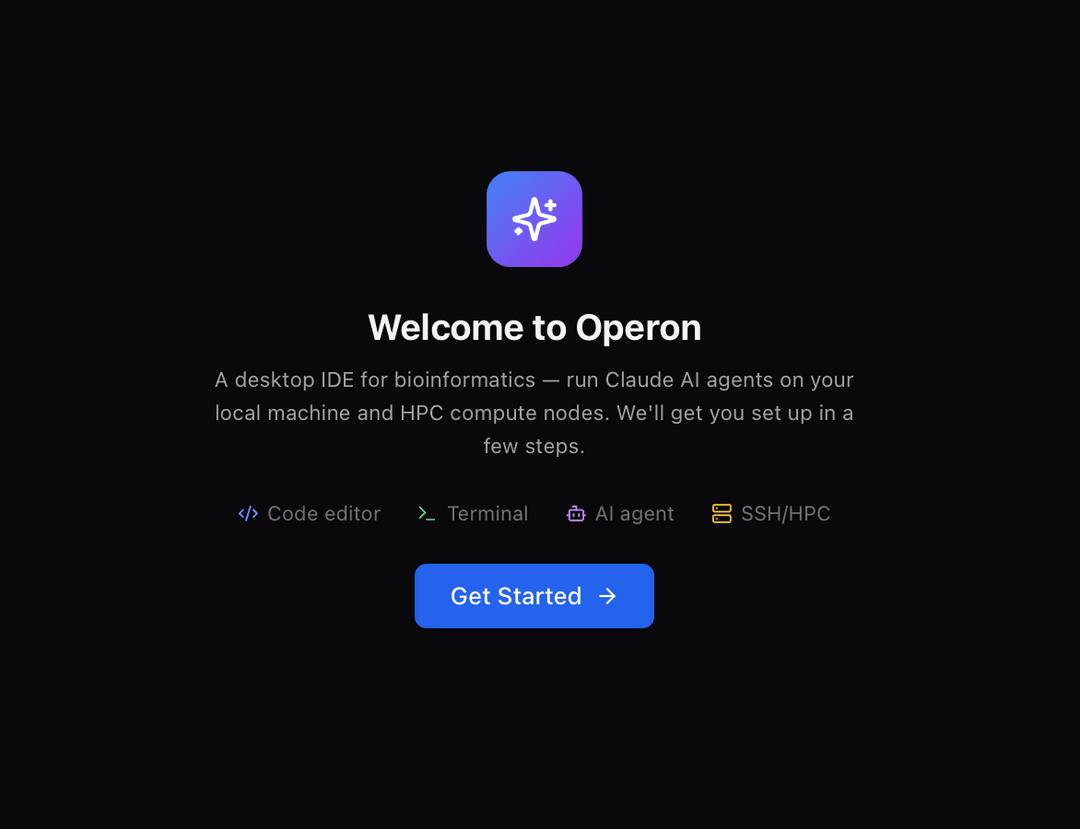
On first launch, Operon walks you through installing all dependencies automatically:
| Step | What's installed |
|---|---|
| 1 | Native toolchain check (Xcode CLT on macOS, WebView2 on Windows, system libs on Linux) |
| 2 | Claude Code (the AI engine) |
| 3 | Optional: GitHub CLI, conda, common bioinformatics CLIs |
Authentication & AI Providers
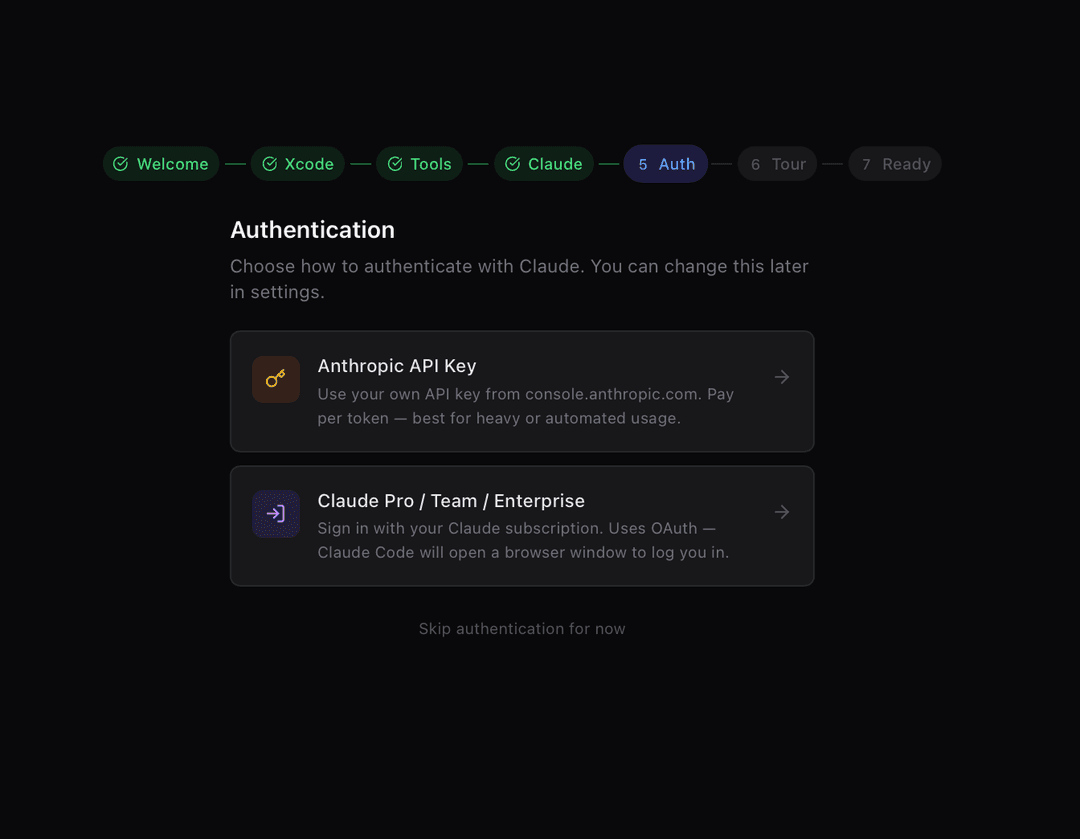
Operon supports three provider backends, picked from Settings → Auth → Provider:
| Provider | Use it for | How to authenticate |
|---|---|---|
| Anthropic (default) | Anthropic OAuth or a personal API key — talks directly to api.anthropic.com | "Log in with Claude" (browser OAuth) or paste an sk-ant-... key |
| Portkey | Institutional gateways (UCI ZotGPT, Bedrock-backed Claude, cost-tracked routing). Anthropic-family models pass through Portkey's /v1/messages; non-Anthropic models (Moonshot Kimi, GPT, Gemini) are auto-routed through Operon's bundled translation proxy. | Paste a Portkey virtual key; pick a model from the auto-loaded catalog |
| Custom | Any OpenAI-compatible local backend — Ollama, vLLM, LM Studio, llama.cpp server. Anthropic-format requests are translated to OpenAI Chat Completions by the bundled anthropic-proxy sidecar. | Enter the base URL (e.g. http://localhost:11434/v1); API key optional for most local backends |
Using Operon
Workspace Overview
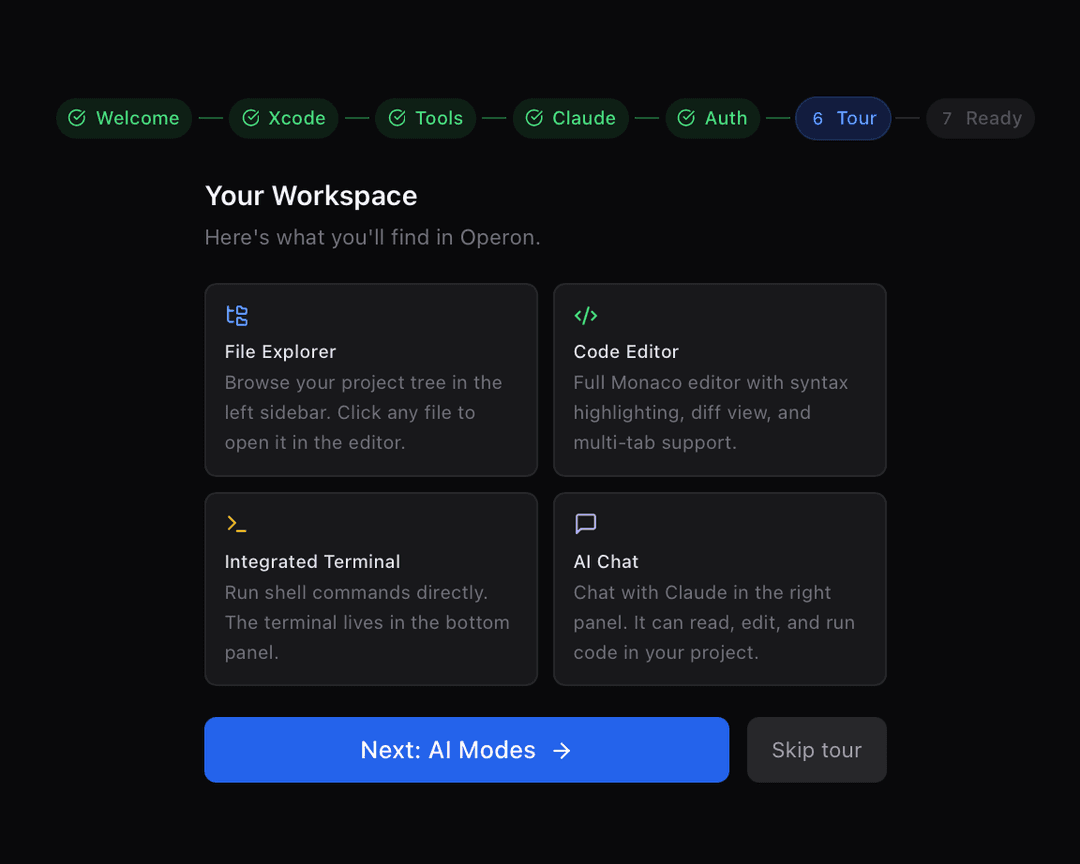
The workspace has 5 main areas:
| Area | Description |
|---|---|
| Activity Bar (left edge) | Switch between File Explorer, SSH, Git, Protocols, Help |
| Sidebar | Context-sensitive panel for the active view |
| Editor (center) | Monaco-based code editor with 30+ language support |
| Terminal (bottom) | Integrated terminal with tab management |
| AI Chat (right) | Claude conversation panel with streaming responses |
File Explorer
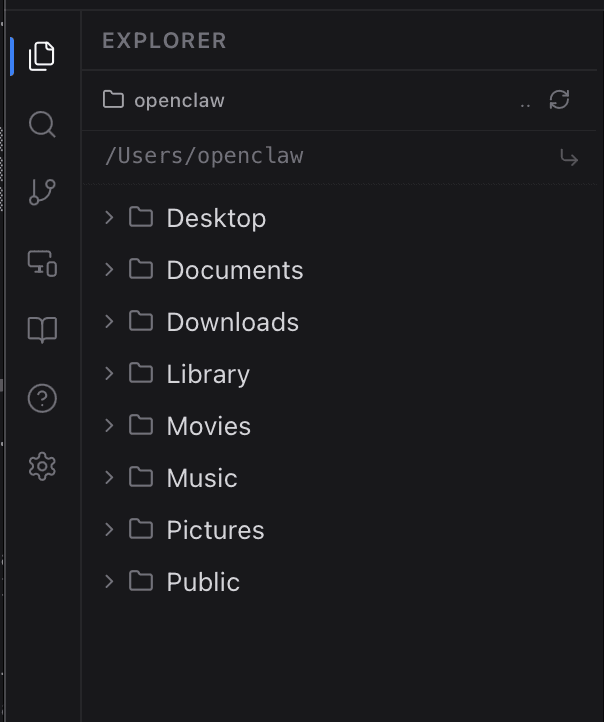
- Tree view with lazy directory loading
- Create, rename, delete files and folders
- Go-to-folder path bar (
Cmd/Ctrl+G) - Symlink-aware (local and remote)
Code Editor
- Monaco Editor — same engine as VS Code
- 30+ languages with syntax highlighting
- Custom
operon-darkandoperon-lightthemes - Side-by-side diff viewer with accept/reject
- Image and PDF viewer with zoom & download
Integrated Terminal
- Full terminal emulator powered by xterm.js
- Multiple tabs with independent sessions
- Auto-copy on selection
- WebGL rendering for performance
- Preserves your shell aliases and conda environments
- On Windows, Claude Code runs through bundled Git Bash so HPC-style Bash scripts work unchanged
AI Chat — Four Modes
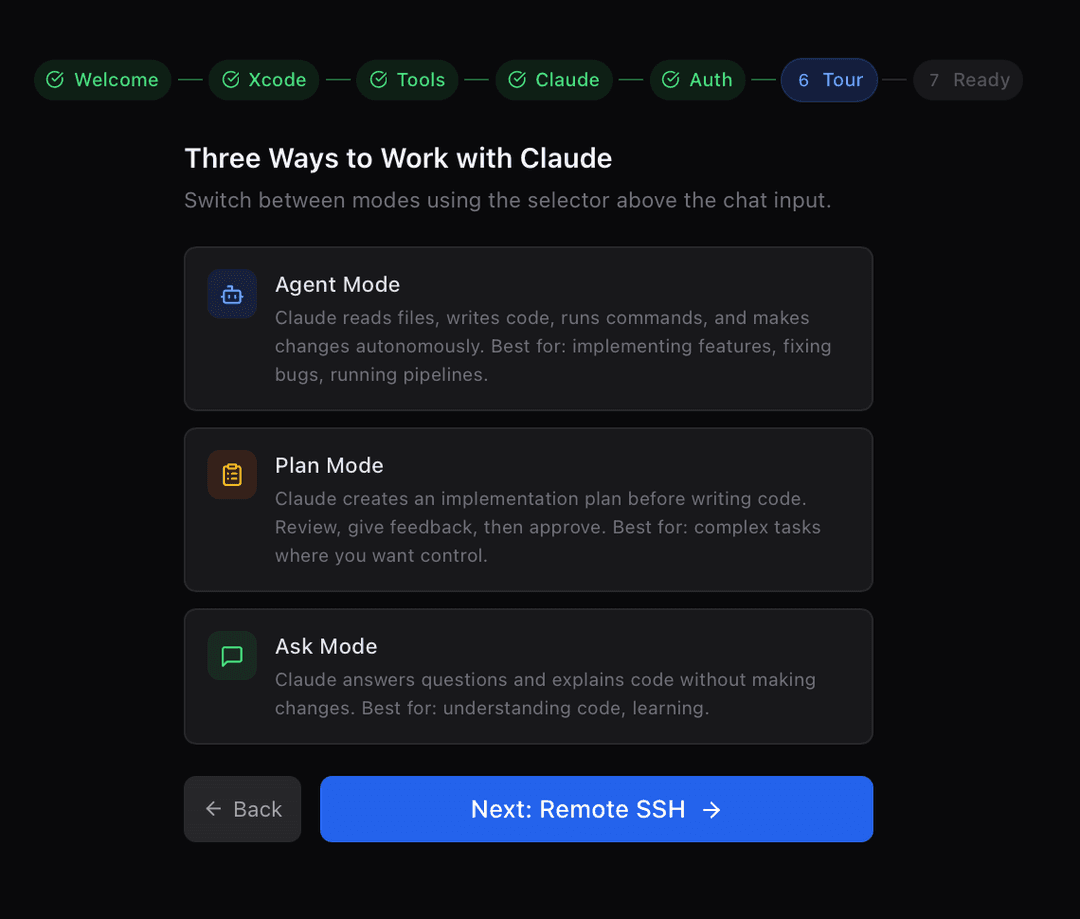
| Mode | Purpose | Best For |
|---|---|---|
| Agent | Executes multi-step tasks autonomously | Writing scripts, running pipelines, debugging |
| Plan | Generates an implementation_plan.md without executing; subsequent Agent runs track progress with [x] markers | Designing analysis workflows, architecture |
| Ask | Conversational Q&A with optional PubMed search | Literature review, explaining concepts |
| Report | Tool-restricted writeup mode that produces a structured methods/results section grounded in your project files | End-of-analysis reports, methods sections for papers |
Analysis Protocols
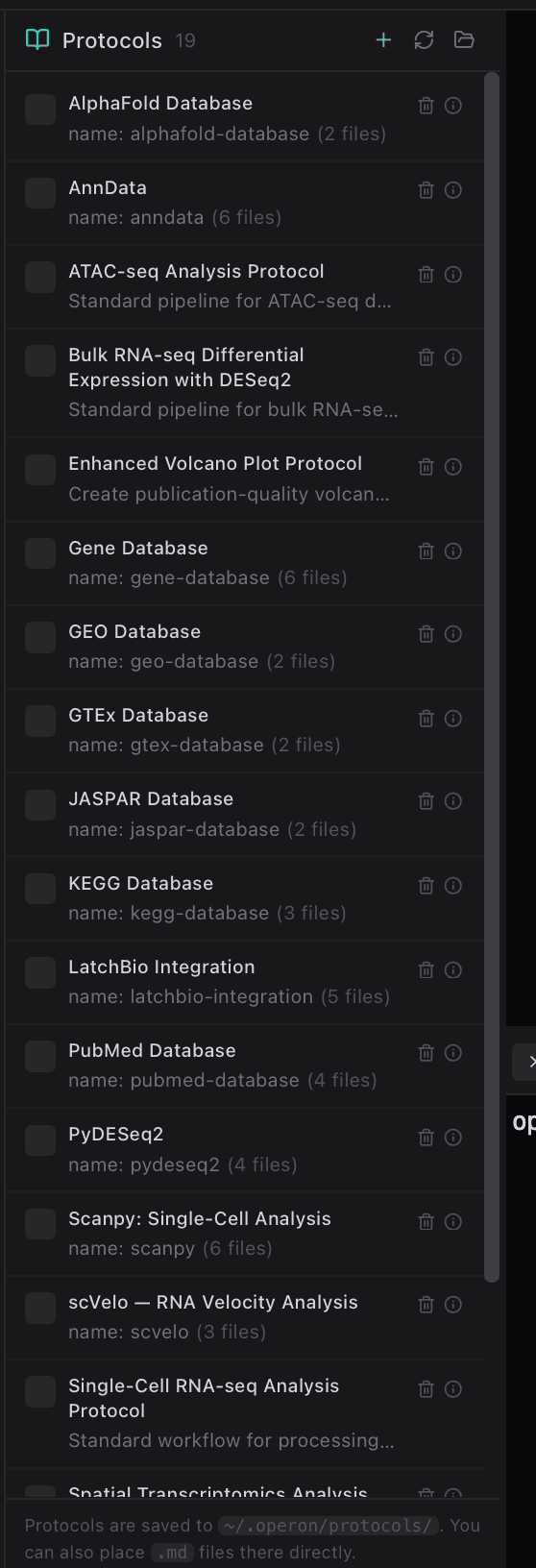
Operon ships with 665 built-in protocols organized into ~30 bio-first categories:
|
|
|
When you select a protocol, its instructions are injected into Claude's context. Claude then follows domain-specific best practices for that analysis type.
Create your own protocols:
- AI-Generated — describe what you need in plain English and Claude writes the full protocol
- Manual — write Markdown in the built-in editor
- Stored in
~/.operon/protocols/— shareable and version-controllable
PubMed Integration
Toggle PubMed search in Ask mode. Claude searches NCBI's PubMed database, retrieves relevant papers, and incorporates findings with proper citations. No API key required — powered by NCBI E-utilities.

Light & Dark Theme
Toggle between light and dark themes from the top bar at any time. The switch propagates everywhere — UI chrome, Monaco editor, xterm terminal palette (WebGL atlas refresh included), and the native macOS title bar.

Remote Server & HPC
SSH Connections
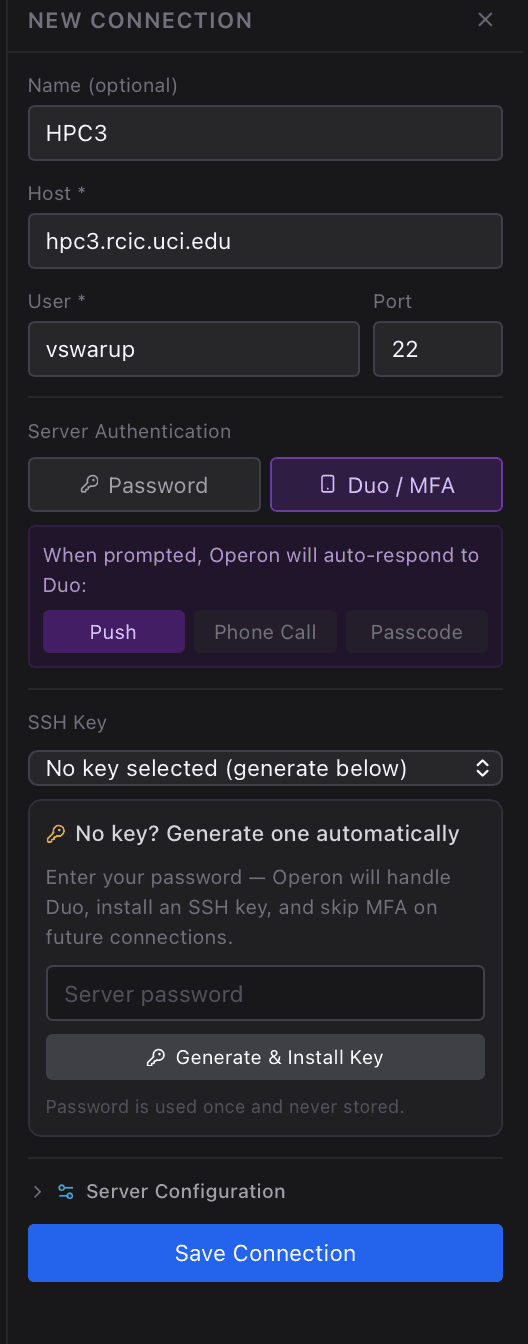
Connect to remote servers and HPC clusters directly from Operon:
- Password and SSH key authentication
- Duo/MFA support for university clusters
- SSH connection multiplexing (fast, fewer auth prompts)
- Browse remote files, edit code, run commands
- Set up SSH keys directly from the app
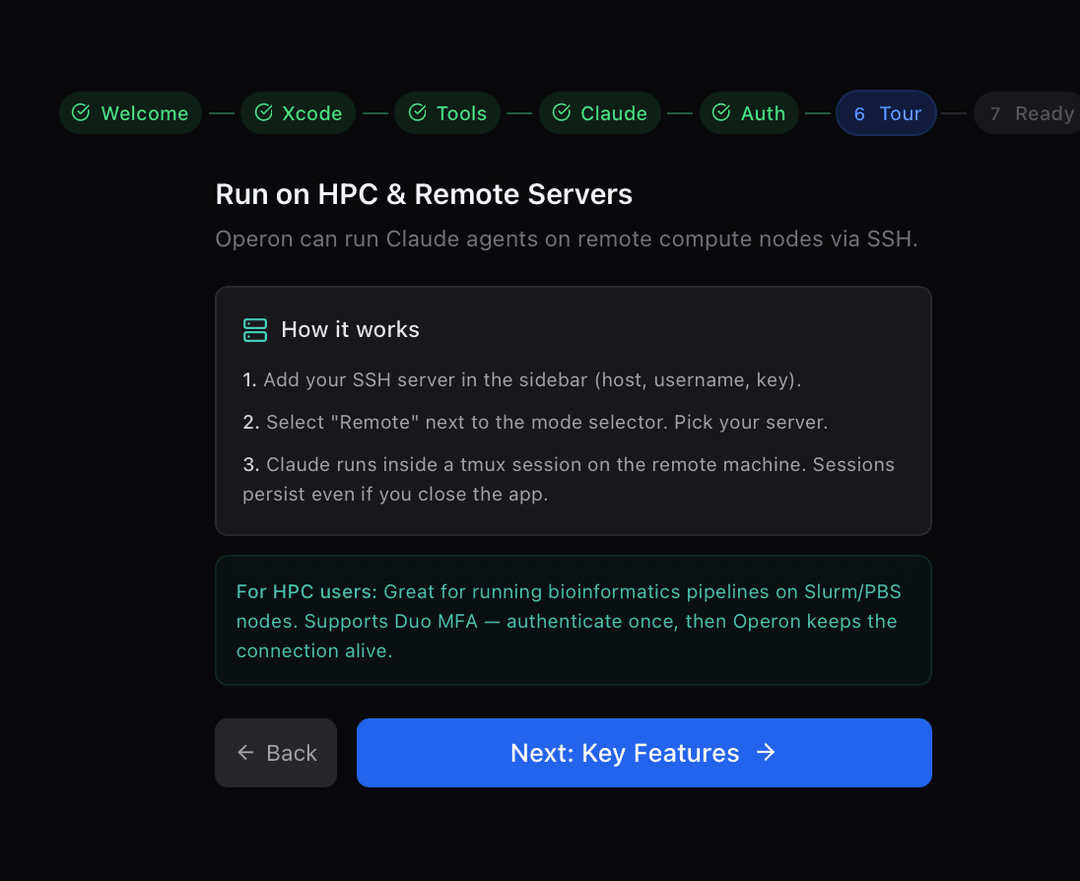
Running AI on Remote Clusters
Operon can install Claude Code on your remote server and run AI sessions directly on HPC infrastructure:
- Agent mode works over SSH — executes commands, writes scripts, submits SLURM/PBS jobs on the remote machine
- Data never leaves the server — only terminal I/O travels over SSH
- Runs inside tmux sessions that persist across app restarts
- Output files written to shared filesystem (not node-local
/tmp)
This is the killer feature for computational biologists: run Claude directly on your university's HPC cluster with access to your data, your conda environments, and your SLURM queue.
Git Integration
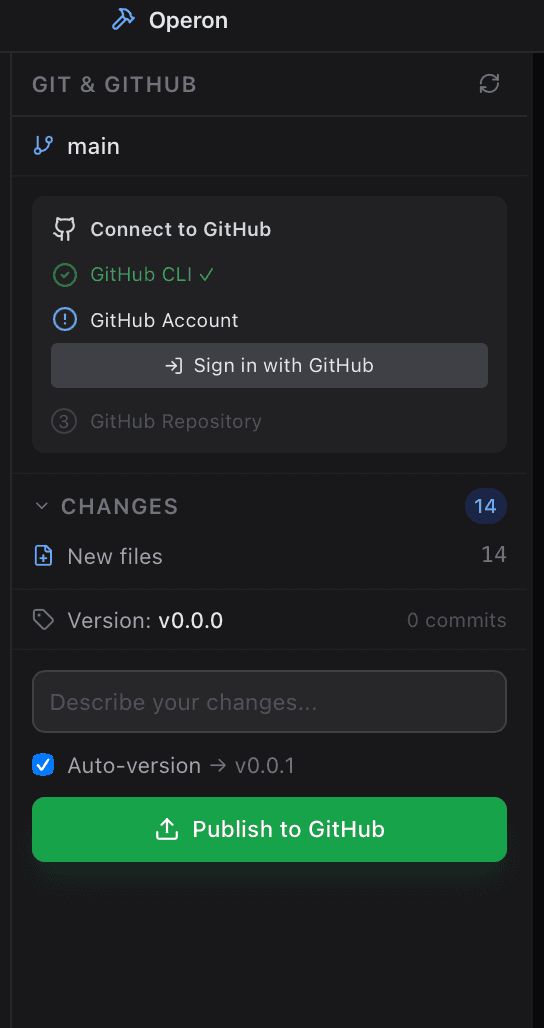
Built-in Git panel in the sidebar:
- View changed files with staged/unstaged diffs
- Stage, unstage, commit with messages
- Push, pull, fetch from remote
- Create and publish new repositories
- Full GitHub workflow without leaving the app
Keyboard Shortcuts
Modifier shorthand: Cmd on macOS, Ctrl on Windows/Linux.
| Shortcut | Action |
|---|---|
Cmd/Ctrl+, | Open Settings |
Cmd/Ctrl+Shift+P | Command Palette |
Cmd/Ctrl+B | Toggle Sidebar |
Cmd/Ctrl+J | Toggle Terminal |
Cmd/Ctrl+Shift+J | Toggle AI Chat |
Cmd/Ctrl+N | New Terminal Tab |
Cmd/Ctrl+W | Close Tab |
Cmd/Ctrl+S | Save File |
Cmd/Ctrl+G | Go to Folder |
Settings & Customization
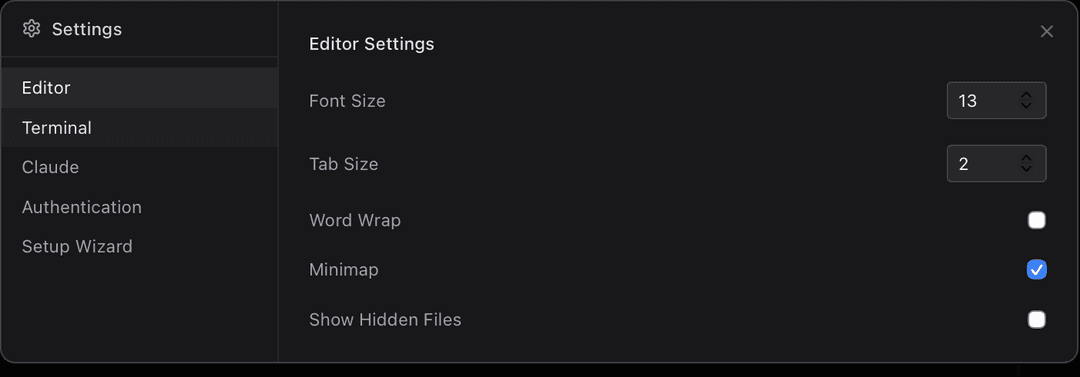
Access via Cmd/Ctrl+, or the gear icon in the top bar.
| Category | Options |
|---|---|
| Editor | Font size, tab size, word wrap, minimap, theme (operon-dark / operon-light) |
| Terminal | Font size, cursor style, scrollback buffer |
| Claude | Provider (Anthropic / Portkey / Custom), model selection, max turns, plan-mode toggle |
| Auth | Anthropic OAuth or API key, Portkey virtual key, custom endpoint URL |
| Appearance | Light / dark theme toggle (also accessible from the top bar) |
Building for Distribution
The same npm run build:<target> scripts used in development produce signed
artifacts when the appropriate signing credentials are present.
macOS — signed & notarized DMGs
cp build-signed.example.sh build-signed.sh
# Edit build-signed.sh with your Apple Developer credentials
bash build-signed.sh
Three macOS templates are provided:
| Template | Target |
|---|---|
build-signed.example.sh | Apple Silicon DMG |
build-intel.example.sh | Intel DMG |
build-universal.example.sh | Universal binary (both architectures) |
Windows & Linux
The GitHub Actions Release workflow builds
signed Windows installers (MSI + NSIS) and Linux bundles (.deb, .rpm,
.AppImage) automatically on every v* tag push. Locally:
npm run build:win      # Windows: .msi + .exe
npm run build:linux    # Linux: .deb + .rpm + .AppImage
Project Architecture
operon/
├── src/                    # React/TypeScript frontend
│   ├── components/         # UI components
│   │   ├── chat/           # AI chat panel with streaming, tool display
│   │   ├── editor/         # Monaco editor, diff viewer, file viewer
│   │   ├── terminal/       # xterm.js terminal with tab management
│   │   ├── sidebar/        # File explorer, SSH, Git, Protocols, Help
│   │   ├── layout/         # AppShell, TopBar, ActivityBar, StatusBar
│   │   ├── settings/       # Settings panel
│   │   └── setup/          # First-time setup wizard
│   ├── context/            # React context (project state, editor tabs, theme)
│   ├── hooks/              # Custom hooks (keyboard shortcuts)
│   ├── lib/                # Typed IPC wrappers (claude, files, terminal, ssh, portkey)
│   └── types/              # TypeScript type definitions
├── src-tauri/              # Rust backend (Tauri 2)
│   ├── src/
│   │   ├── main.rs         # Entry point
│   │   ├── lib.rs          # Tauri builder, state managers, command registration
│   │   └── commands/       # IPC command handlers (terminal, files, claude, ssh, settings, portkey, proxy)
│   ├── binaries/           # Bundled sidecars (anthropic-proxy translation layer)
│   └── icons/              # App icons (icns, png, ico)
├── protocols/              # 665 bundled bioinformatics protocols (Markdown)
├── presets/                # Hot-fetchable Portkey gateway presets
├── docs/                   # Documentation website + images
└── build-*.example.sh      # macOS signed-build script templates (no credentials)
Tech Stack
| Layer | Technology |
|---|---|
| App Shell | Tauri 2 (Rust) — small bundle, native webview |
| Frontend | React 18 + TypeScript + Vite 6 |
| Terminal | xterm.js + portable-pty (same stack as VS Code & WezTerm) |
| Editor | Monaco Editor (VS Code's engine) |
| Layout | react-resizable-panels |
| Styling | Tailwind CSS 3 + lucide-react icons; CSS-variable themes |
| SSH | OpenSSH sidecar via PTY (ProxyJump, agent forwarding, ~/.ssh/config) |
| AI Engine | Claude Code (headless NDJSON streaming) + bundled anthropic-proxy-rs for OpenAI-compatible backends |
| Provider Routing | Anthropic direct · Portkey gateways · Custom OpenAI-compatible (Ollama / vLLM / LM Studio) |
Contributing
We welcome contributions from the bioinformatics community!
Branch model:
cross-platform— active development and the default branch (PRs go here)- Release tags (
v0.7.x) are cut directly fromcross-platformand trigger the multi-OS Release workflow
- Fork the repository
- Create a feature branch off
cross-platform(git checkout -b feature/my-feature cross-platform) - Make your changes
- Run the dev server to test (
npm run tauri dev) - Commit and push
- Open a Pull Request targeting
cross-platform
Help & Support
| Resource | Link |
|---|---|
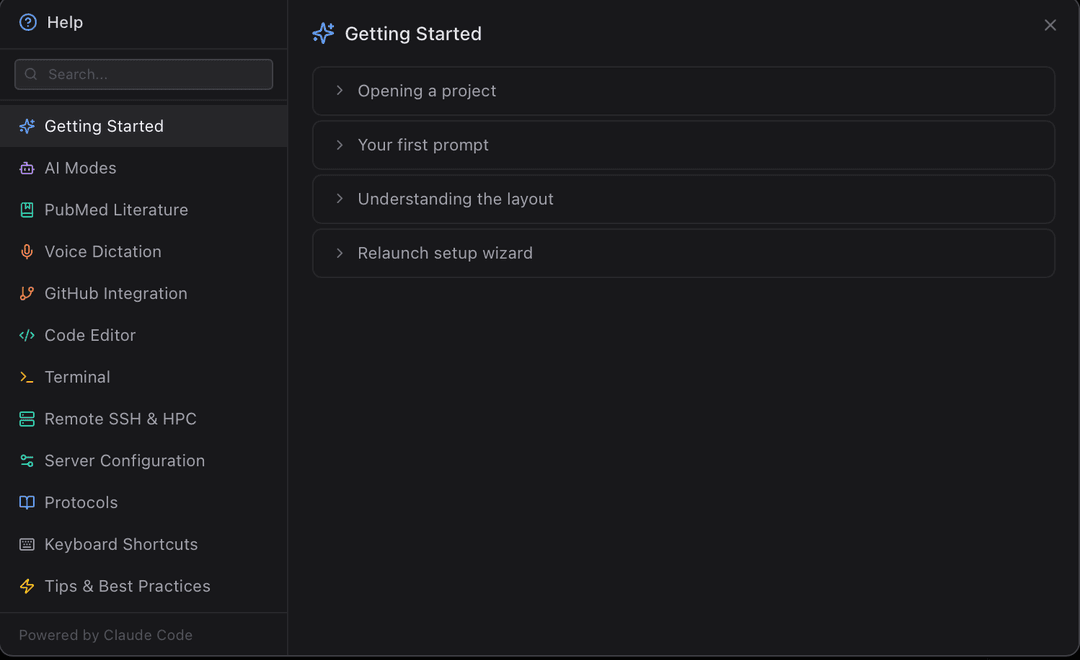
| In-app Help | Click the Help icon in the activity bar |
| Documentation | swaruplab.bio.uci.edu/operon |
| Bug Reports | GitHub Issues |
| Latest Downloads | GitHub Releases |
| Release Notes | CHANGELOG.md |
License
MIT License — see LICENSE for details.
Built with care by Swarup Lab at UC Irvine
// faq
What is operon?
AI-powered IDE for bioinformatics — built by biologists, for biologists. It is open-source on GitHub.
Is operon free to use?
operon is open-source under the MIT license, so it is free to use.
What category does operon belong to?
operon is listed under data in the Claudeers registry of Claude-compatible tools.
// embed badge

[](https://claudeers.com/operon)
// retro hit counter

[](https://claudeers.com/operon)
// reviews
// guestbook
// related in DevOps & CI/CD
 🔓
🔓⭐AI-driven public opinion & trend monitor with multi-platform aggregation, RSS, and smart alerts.🎯 告别信息过载,你的 AI 舆情监控助手与热点筛选工具!聚合多平台热点 + RSS 订阅,支持关键词精准筛选。AI…
 🔓
🔓Use Claude Code as the foundation for coding infrastructure, allowing you to decide how to interact with the model while enjoying updates from Anthropic.
 🔓
🔓Professional Antigravity Account Manager & Switcher. One-click seamless account switching for Antigravity Tools. Built with Tauri v2 + React (Rust).专业的 Antig…
 🔓
🔓Roadmap to becoming an ASP.NET Core developer in 2026