
mcp-vision-bridge
MCP server that gives text-only LLM coding agents vision — analyze images via any multimodal model (mimo, Claude, Gemini, OpenAI-compatible). Works with Clau…
Install with your AI
Paste into Claude Code, Cursor, or any agent — it reads the repo and wires the tool into your project.
Install and set up mcp-vision-bridge (claude-plugin project) into my current project.
Found on https://claudeers.com/mcp-vision-bridge
Repo: https://github.com/KuaaMU/mcp-vision-bridge
Homepage/docs: —
Detected install method: claude-plugin → /plugin install mcp-vision-bridge@KuaaMU/mcp-vision-bridge
Category: mcp-servers. Platforms: cli, api, desktop, web.
Read the repo's README for exact setup and env vars, then install it and wire it into my project.

Claudeers Health Verdict:
slowing; community-verified: false. Confirm the source before running anything.
/plugin marketplace add KuaaMU/mcp-vision-bridge
/plugin install mcp-vision-bridge@KuaaMU/mcp-vision-bridge
git clone https://github.com/KuaaMU/mcp-vision-bridge
// compatibility
| Platforms | cli, api, desktop, web |
|---|---|
| Operating systems | — |
| AI compatibility | claude |
| License | MIT |
| Pricing | open-source |
| Language | TypeScript |
👁️ mcp-vision-bridge
Give your text-only coding agent eyes.
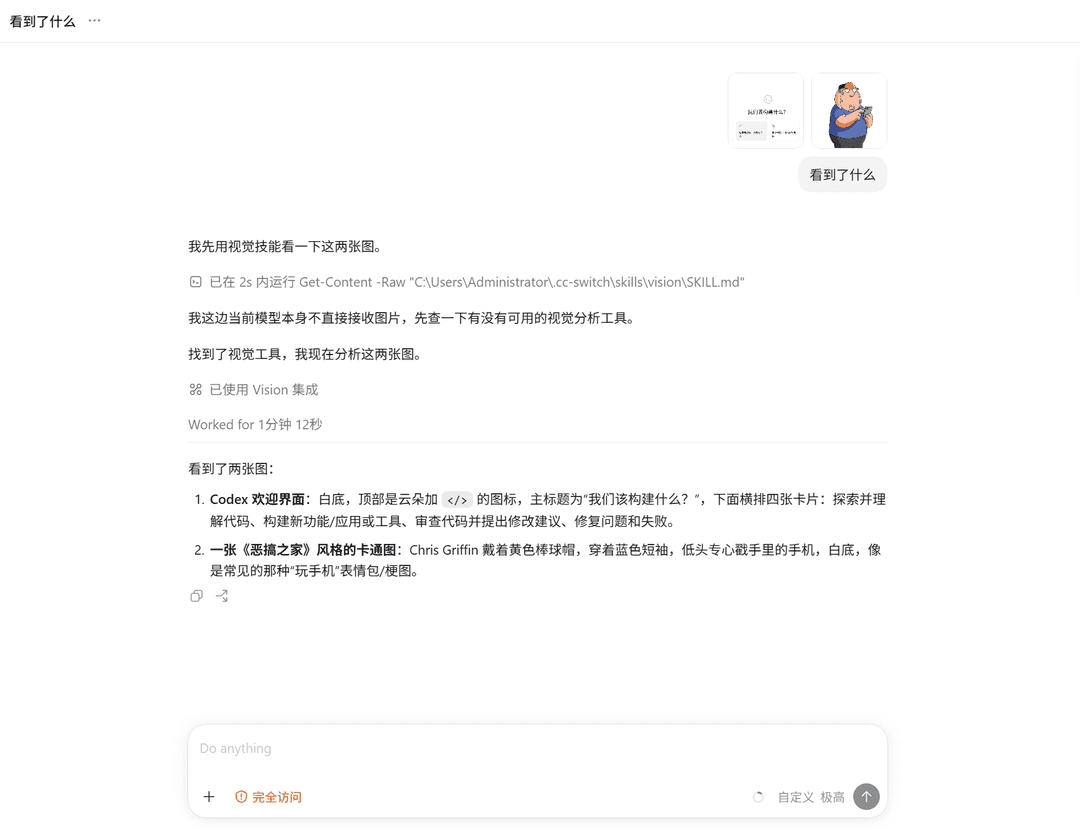
DeepSeek V4 Flash writes great code — but it can't see the error dialog, the broken UI, or the screenshot you just pasted. This MCP server gives any text-only agent vision by routing images through a multimodal model of your choice.
Works with Claude Code · Codex · opencode · Kimi · PI · Cursor and any MCP client.
Why you need this
Your agent can't see. You paste a screenshot → "I can't see images." You transcribe the error by hand. With this, the agent calls one tool and gets a complete text description — verbatim text, layout, colors, anomalies — and can debug, fix, and explain.
Not a vision model. It's a bridge: it sends your image to a multimodal model you already pay for (mimo, Claude, Gemini, GPT-4o, Qwen-VL…) and returns a detailed description. No images ever enter your agent's context.
🚀 Install (pick your agent — that's the whole setup)
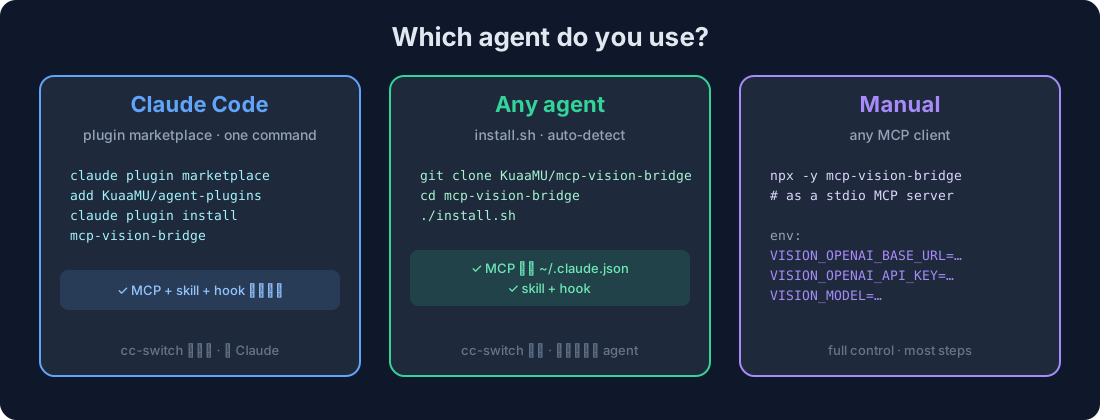
Claude Code (one command)
claude plugin marketplace add KuaaMU/agent-plugins
claude plugin install mcp-vision-bridge
That's it — the plugin bundles the MCP server + vision skill + auto-loop hook. Claude Code will prompt you for your vision endpoint, API key, and model once.
Auto-updating: the MCP server self-syncs the bundled skill + hook into
~/.claude/on startup, so every restart pulls the latest version along with the npm package. SetVISION_NO_SYNC=1to disable auto-sync.
Prefer to manage it in cc-switch (see it + sync to Codex/opencode/Gemini)? Use the installer below instead.
Codex / Reasonix / opencode / Kimi / anything else (one command)
git clone https://github.com/KuaaMU/mcp-vision-bridge && cd mcp-vision-bridge
./install.sh                     # auto-detects your agent
./install.sh claude | reasonix | codex | opencode | kimi if it doesn't auto-detect. You'll be asked for three values: endpoint, key, model.
Reasonix reads the same .mcp.json as Claude Code, so ./install.sh reasonix
(or a manual .mcp.json with the vision server) works — pasted images land in
.reasonix/attachments/ and image="recent" finds them.
Manual (no install script)
Add this as a stdio MCP server in your agent:
{
  "command": "npx",
  "args": ["-y", "mcp-vision-bridge"],
  "env": {
    "VISION_OPENAI_BASE_URL": "https://your-endpoint/v1",
    "VISION_OPENAI_API_KEY": "sk-your-key",
    "VISION_MODEL": "your-vision-model"
  }
}
Requires Node.js ≥ 18.
🎯 Use
After install, restart your agent, then:
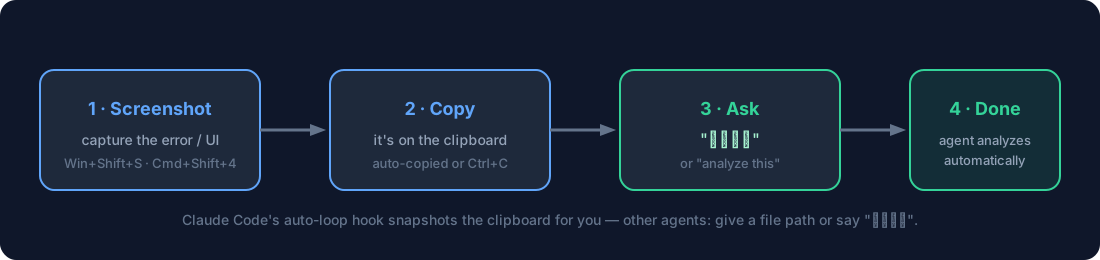
Best way — drag the image file into the chat. Dragging an image file into
any agent (TUI or GUI) inserts its real path, which analyze_image accepts
directly — works identically in Claude Code, Cowork, Codex, opencode, PI, and
more. No clipboard, no paste quirks.
- Drag an image file into the input box (or Ctrl+V in Claude Code / Cowork)
- Say "看看这个" (or "analyze this", "what's the error?")
- Your agent calls
analyze_image→ the vision model describes it in detail
Paste 3 images? The hook reads your session transcript (lossless, multi-image).
image="recent" auto-finds pasted images across Claude Code CLI, Reasonix,
Cowork, and Codex — no clipboard needed. If a desktop GUI doesn't register a
paste (it can fail silently), just drag the file in — a path always works.
The one tool
Agent docs → README_AGENT.md (tool contract, source choice, error handling).
analyze_image(
  image   = "path | URL | clipboard | recent | session | data:URI",  // single, or
             ["path","path",...]                                      // several in one call
  task    = "describe | ocr | ui | layout | qa",   // or use prompt:
  prompt  = "What error is on screen?",
  detail  = "high" | "low",
  save_to = "optional file for long output"
)
image— local path, http(s) URL,"clipboard","recent"(most recent pasted image in this session),"session"(every image pasted in this session, analyzed in one call), a base64 data URI, or an array of these to analyze multiple images at once (e.g. "compare these two").task— prompt presets for common jobs;ocrasks the vision model to extract text,uispecs a screen, etc. (There's no bundled OCR engine — the model itself does the reading.)prompt— free-form question (overridestask). Pass the user's actual question here — the vision model answers what you ask, so a specific question ("what error is shown?") beats a genericdescribe.
How pasted images are discovered
Pasting an image into a coding agent stores it somewhere. image="recent" /
"session" find it automatically — no clipboard, no manual paths:
| Agent | Where pasted images land | Auto-found? |
|---|---|---|
| Claude Code CLI/TUI | ~/.claude/image-cache/<uuid>/N.png (paste with Alt+V) | ✅ |
| Reasonix | ~/.reasonix/sessions/ + project .reasonix/attachments/ | ✅ |
| opencode | ~/.local/share/opencode/opencode.db (SQLite part table, Node ≥ 22.5) | ✅ |
| Cowork (Claude-3p desktop) | %LOCALAPPDATA%\Claude-3p\...\uploads\*_image.png | ✅ |
| Codex | ~/.codex/attachments/<session>/image-*.png | ✅ |
| Grok Build | ~/.grok/sessions/*/*/images/ | ✅ |
Windows clipboard reality: in Explorer, "copy file" (Ctrl+C) puts a file list on the clipboard — not image bytes. So pasting a local image into a CLI only works if you copy the image content (screenshot tool, browser "copy image"). Otherwise just paste the file path —
analyze_imagereads it directly.
Architecture
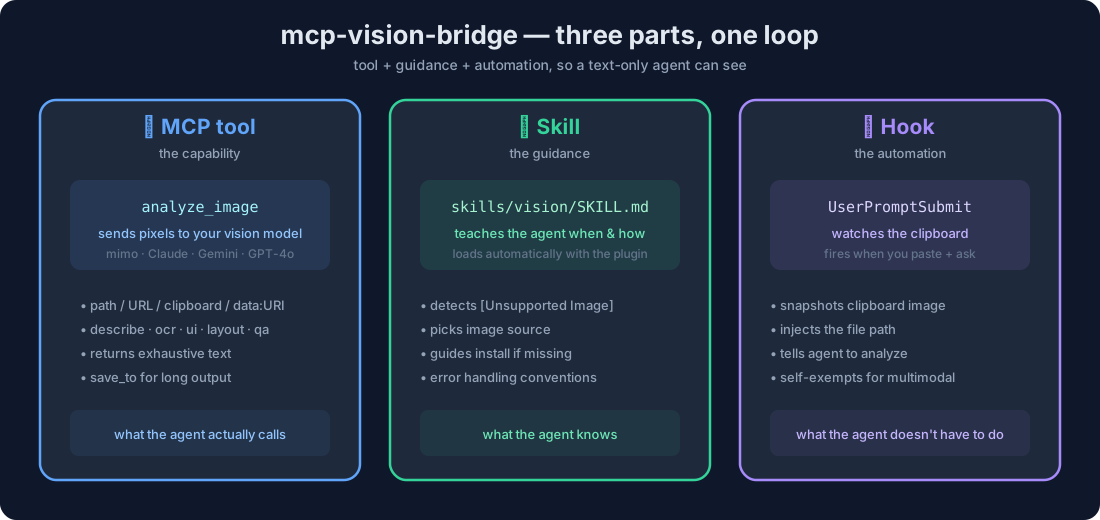
Three parts that close the loop for a text-only agent:
- MCP tool (
analyze_image) — the capability. Sends pixels to your vision model, returns text. - Skill (
skills/vision/) — the guidance. Tells the agent when and how to call it. - Hook (
UserPromptSubmit) — the automation. Captures a pasted image from the session transcript and triggers the call for you.
Install them all with the plugin (Claude Code) or install.sh (any agent).
How it works
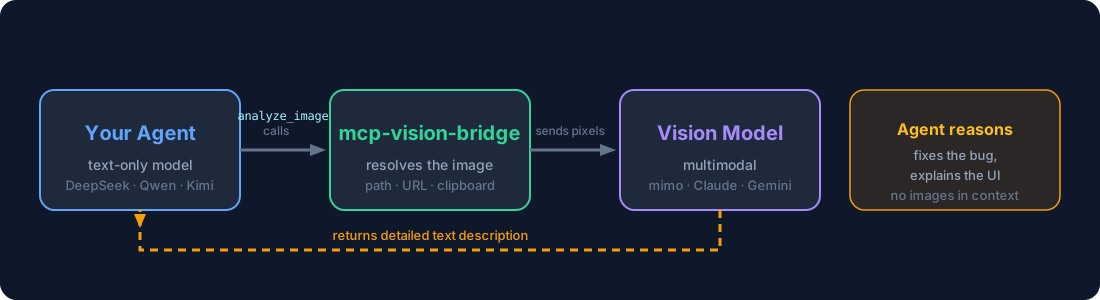
Pure text in, pure text out. The server never interprets the image — it fetches the bytes and lets your vision model do the seeing.
Configuration
All via environment variables (the MCP reads them from your agent's server config).
| Variable | When | Example |
|---|---|---|
VISION_OPENAI_BASE_URL | OpenAI-compatible | https://opencode.ai/zen/go/v1 |
VISION_OPENAI_API_KEY | OpenAI-compatible | sk-... |
VISION_MODEL | always | mimo-v2.5, gpt-4o, qwen-vl-max |
VISION_PROVIDER | non-openai | anthropic | gemini |
VISION_ANTHROPIC_API_KEY | anthropic | sk-ant-... |
VISION_GEMINI_API_KEY | gemini | AIza... |
VISION_MAX_TOKENS | optional | 4096 per image — multi-image multiplies it ×N (each image keeps its own budget, capped 32000) so detailed descriptions aren't truncated |
VISION_TIMEOUT_MS | optional | 30000 |
VISION_BLOCK_PRIVATE_URLS | optional | true to block localhost fetches |
Development
npm install
npm run build          # tsc → dist/
npm test               # vitest
npm run test:e2e       # stdio pipeline against a mock provider
Layout: src/ (server), skills/vision/ (skill), hooks/ (auto-loop hook),
install.sh (installer), examples/ (per-agent templates).
Release: bump the version in package.json, push, then
git tag vX.Y.Z && git push origin vX.Y.Z — GitHub Actions runs tests and
publishes to npm automatically.
Security
- Keys live in env/config only — never in tool arguments.
- Optional SSRF guard for URL sources.
- Images go only to your configured vision provider.
License
// faq
What is mcp-vision-bridge?
MCP server that gives text-only LLM coding agents vision — analyze images via any multimodal model (mimo, Claude, Gemini, OpenAI-compatible). Works with Claude Code, Codex, Kimi, opencode, PI.. It is open-source on GitHub.
Is mcp-vision-bridge free to use?
mcp-vision-bridge is open-source under the MIT license, so it is free to use.
What category does mcp-vision-bridge belong to?
mcp-vision-bridge is listed under mcp-servers in the Claudeers registry of Claude-compatible tools.
// embed badge

[](https://claudeers.com/mcp-vision-bridge)
// retro hit counter

[](https://claudeers.com/mcp-vision-bridge)
// reviews
// guestbook
// related in MCP Servers
 🔓
🔓f.k.a. Awesome ChatGPT Prompts. Share, discover, and collect prompts from the community. Free and open source — self-host for your organization with complete…
 🔓
🔓A cross-platform desktop All-in-One assistant for Claude Code, Codex, OpenCode, OpenClaw, Gemini CLI & Hermes Agent. Only official website: ccswitch.io
 🔓
🔓🪨 why use many token when few token do trick — Claude Code skill that cuts 65% of tokens by talking like caveman
 🔓
🔓An open-source AI agent that brings the power of Gemini directly into your terminal.