
loom-notes
A gorgeous XeLaTeX class + Claude skill for fill-in study notes — read and fill, learn by active recall.
Install with your AI
Paste into Claude Code, Cursor, or any agent — it reads the repo and wires the tool into your project.
Install and set up loom-notes (git-clone project) into my current project.
Found on https://claudeers.com/loom-notes
Repo: https://github.com/Polaris-Aeterna/loom-notes
Homepage/docs: —
Detected install method: git-clone → git clone https://github.com/Polaris-Aeterna/loom-notes
Category: education. Platforms: api.
Read the repo's README for exact setup and env vars, then install it and wire it into my project.

Claudeers Health Verdict:
slowing; community-verified: false. Confirm the source before running anything.
git clone https://github.com/Polaris-Aeterna/loom-notes
// compatibility
| Platforms | api |
|---|---|
| Operating systems | — |
| AI compatibility | claude |
| License | NOASSERTION |
| Pricing | open-source |
| Language | TeX |
🧶 Loom
Weave your understanding — a gorgeous XeLaTeX class for fill-in study notes
Notes you both read and fill: statements and intuition to take in, blanks and proof-skeletons to work out. Learn by active recall, on paper that looks like an illuminated manuscript.

Why Loom
Most notes are read-only: definition → theorem → proof, flowing past your eyes. You finish the page and remember nothing. Loom typesets the other layer too — the weave of your own understanding:
- 🧵 A page is cloth on a loom. Warp threads are the ideas in play (a left selvage rail). Knots are results that bind them (theorem boxes). Loose threads are your open questions. A warmth gauge records how well you actually grok each block.
- ✍️ Passive + active in one document. The exposition is written to be read;
the high-value steps are left blank (
\fillin), proofs ship as skeletons (\TODO), and the book's examples are restaged as "your turn" computations. The source is your answer key. - 🎨 Dyed in real pigments. Indigo, madder, weld, iron-gall — historical textile and ink dyes no maths template uses. Headings incised in Optima, body and math in Libertinus, 中文 in Songti/楷体. Every cover carries a procedurally-woven emblem.
- 🤖 An AI skill that writes them for you. Point Claude at a chapter and the
fill-in-notesskill produces a complete, compiling notebook in this style — organized around a spine, not transcribed.
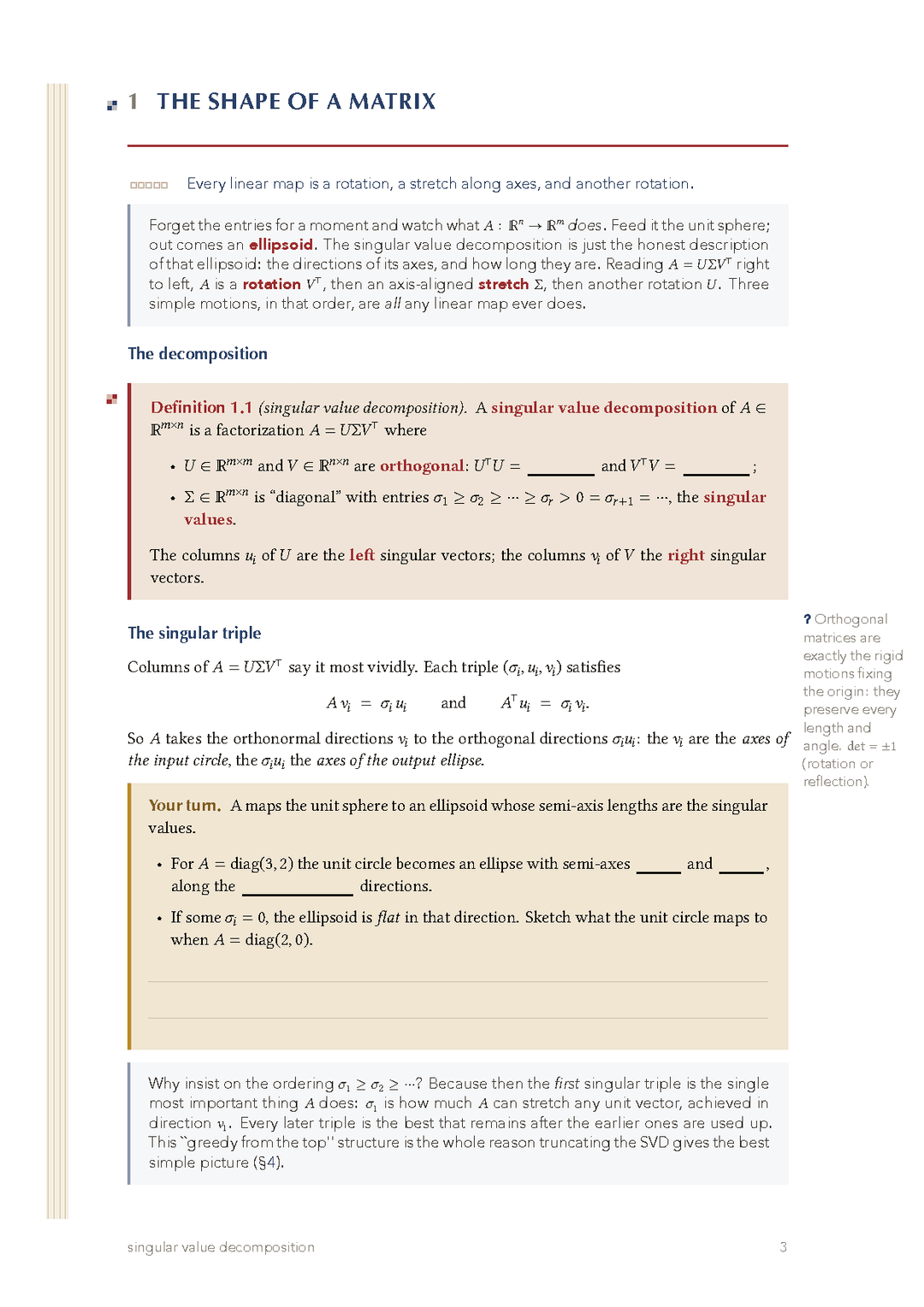 | 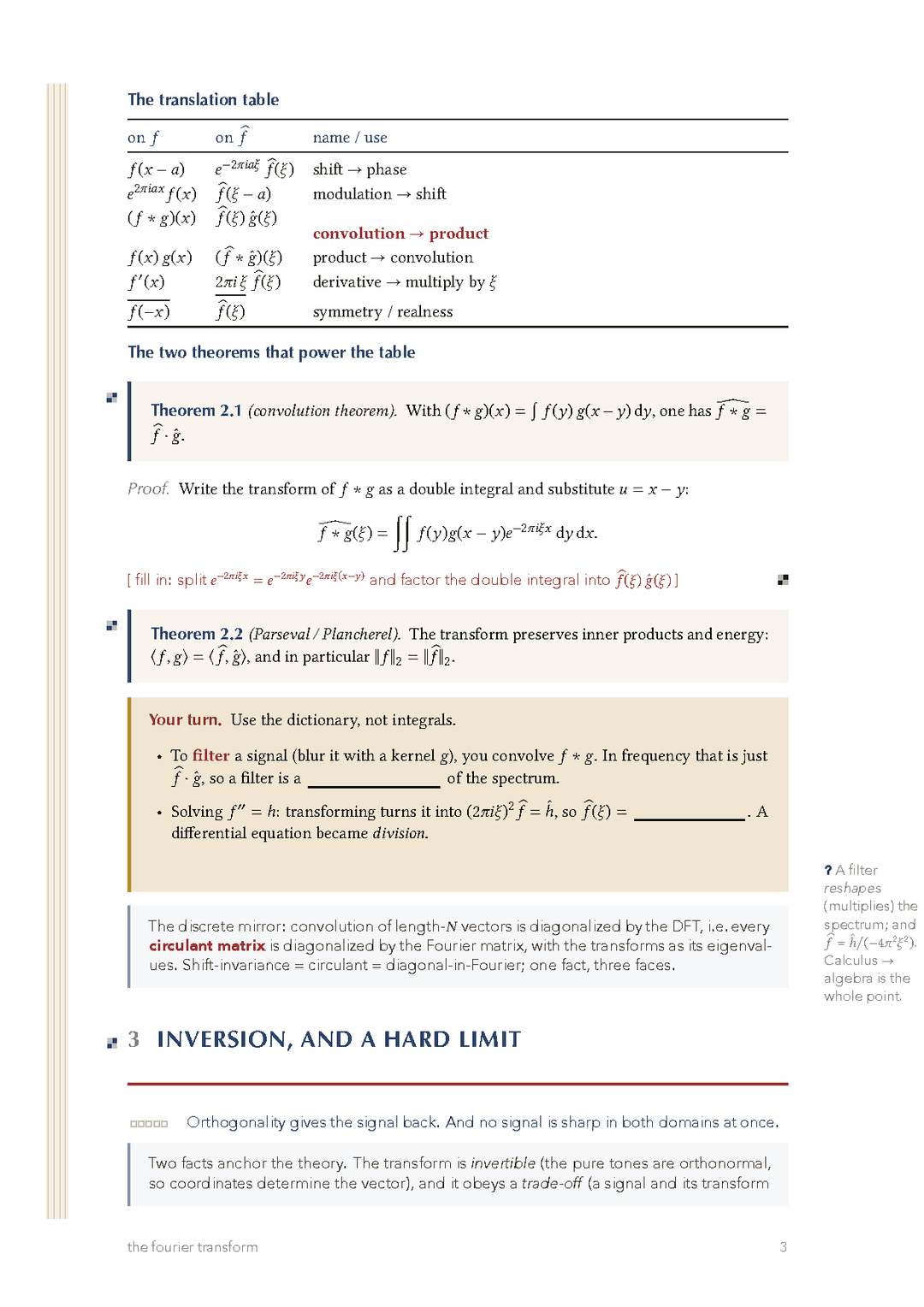 |
| Singular Value Decomposition — a definition knot, the geometry, a Your turn | Fourier transform — the dictionary, the convolution theorem |
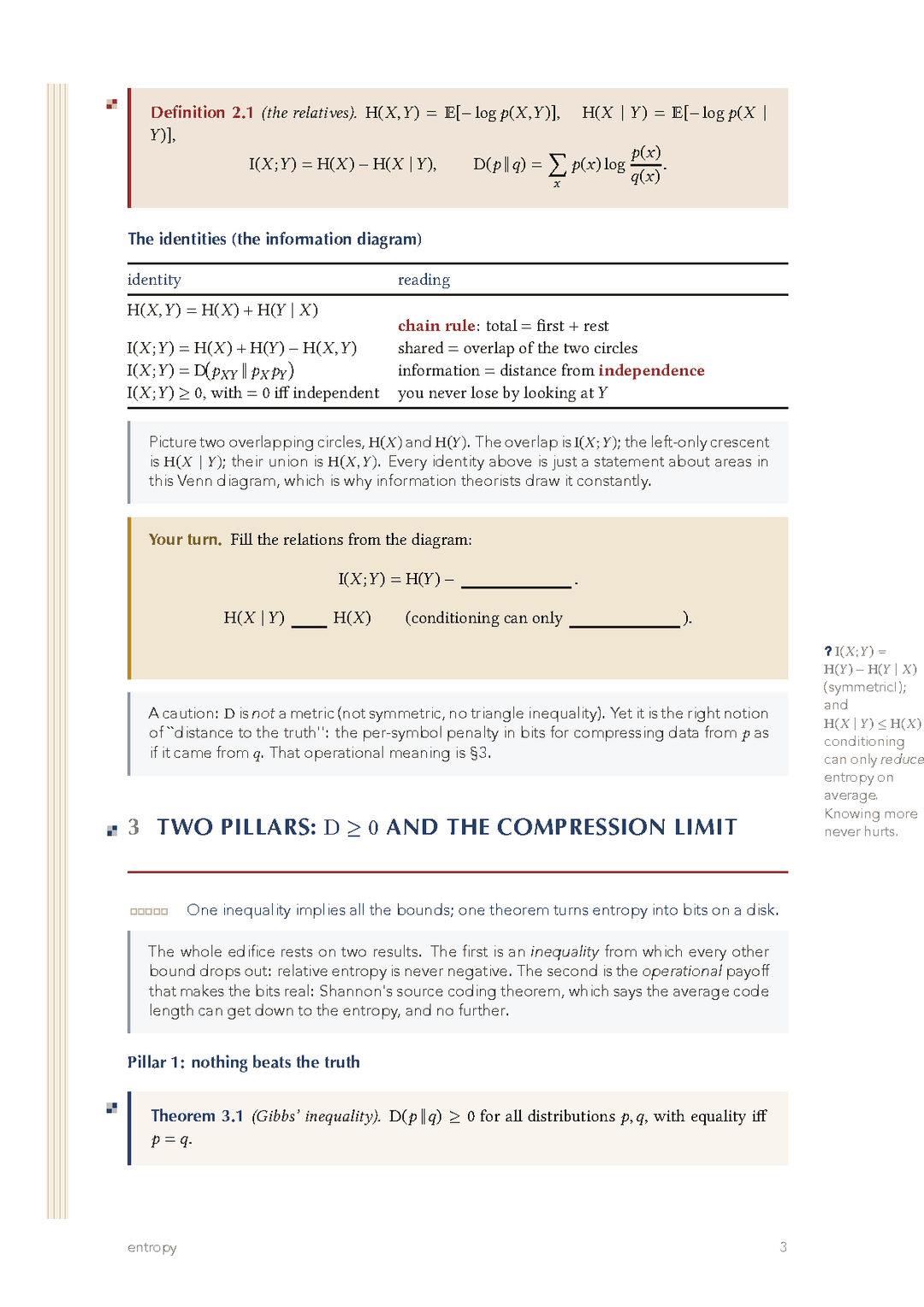 | 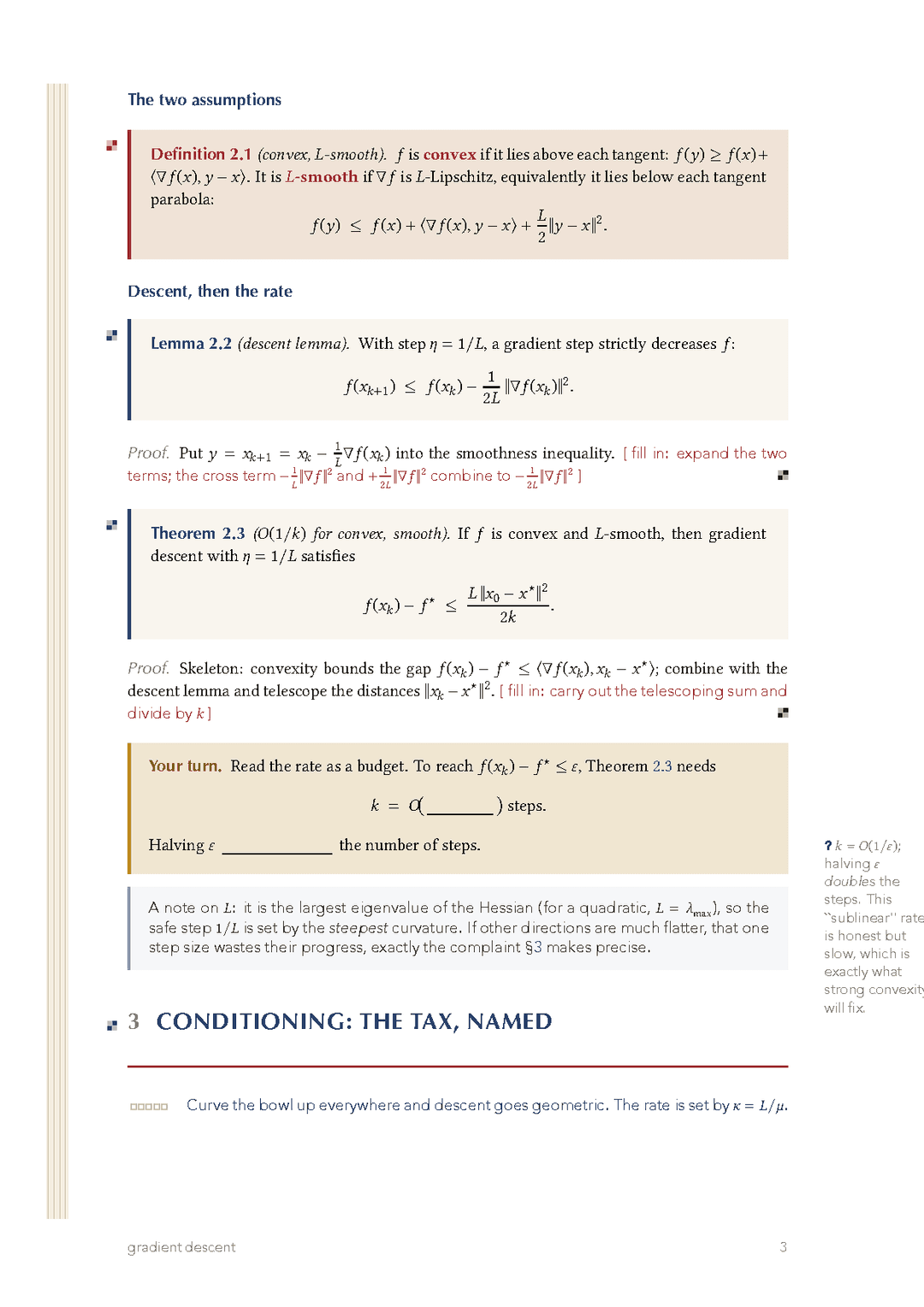 |
| Entropy — the information diagram, Gibbs' inequality | Gradient descent — the rate, and the cost of conditioning |
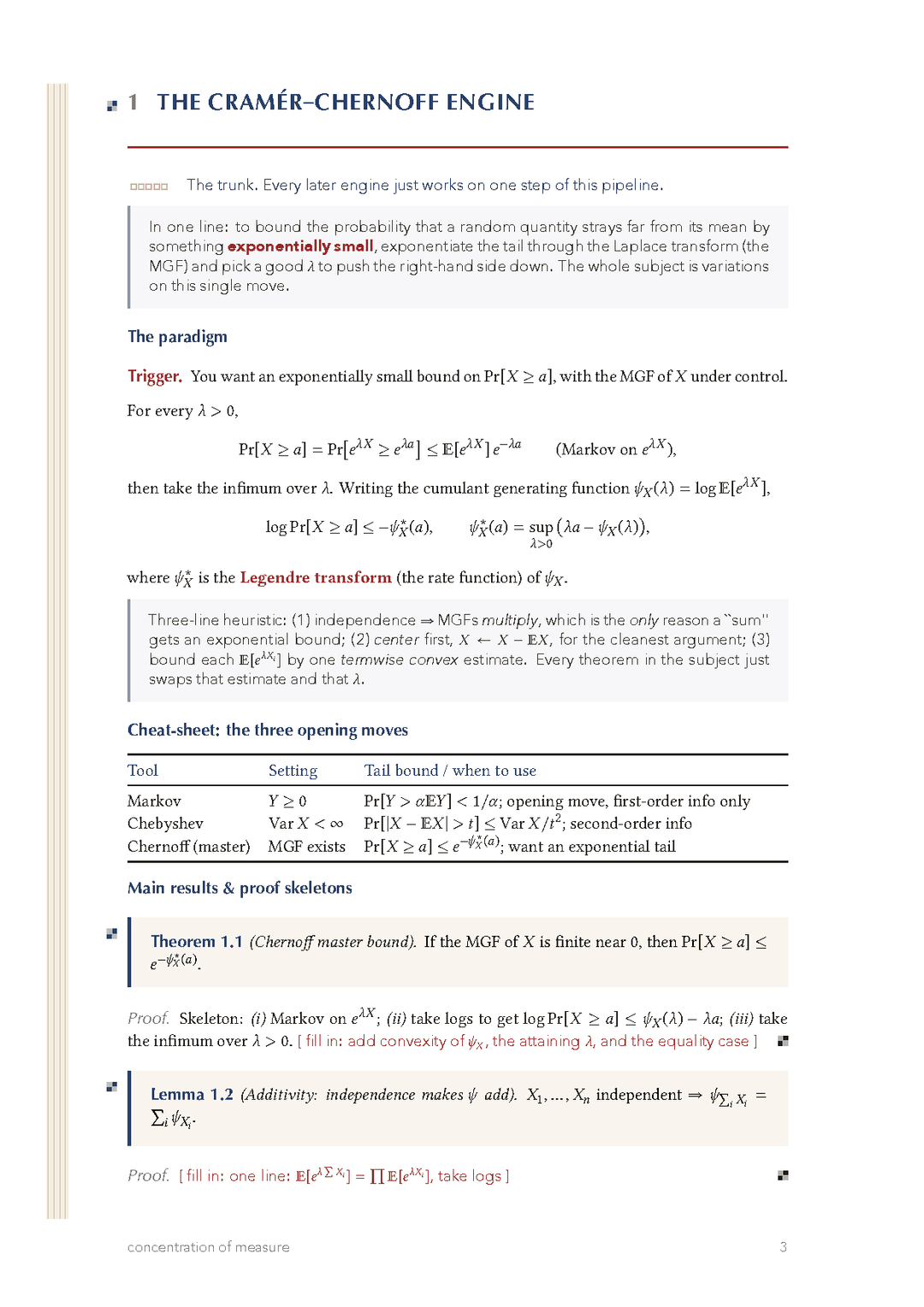 | 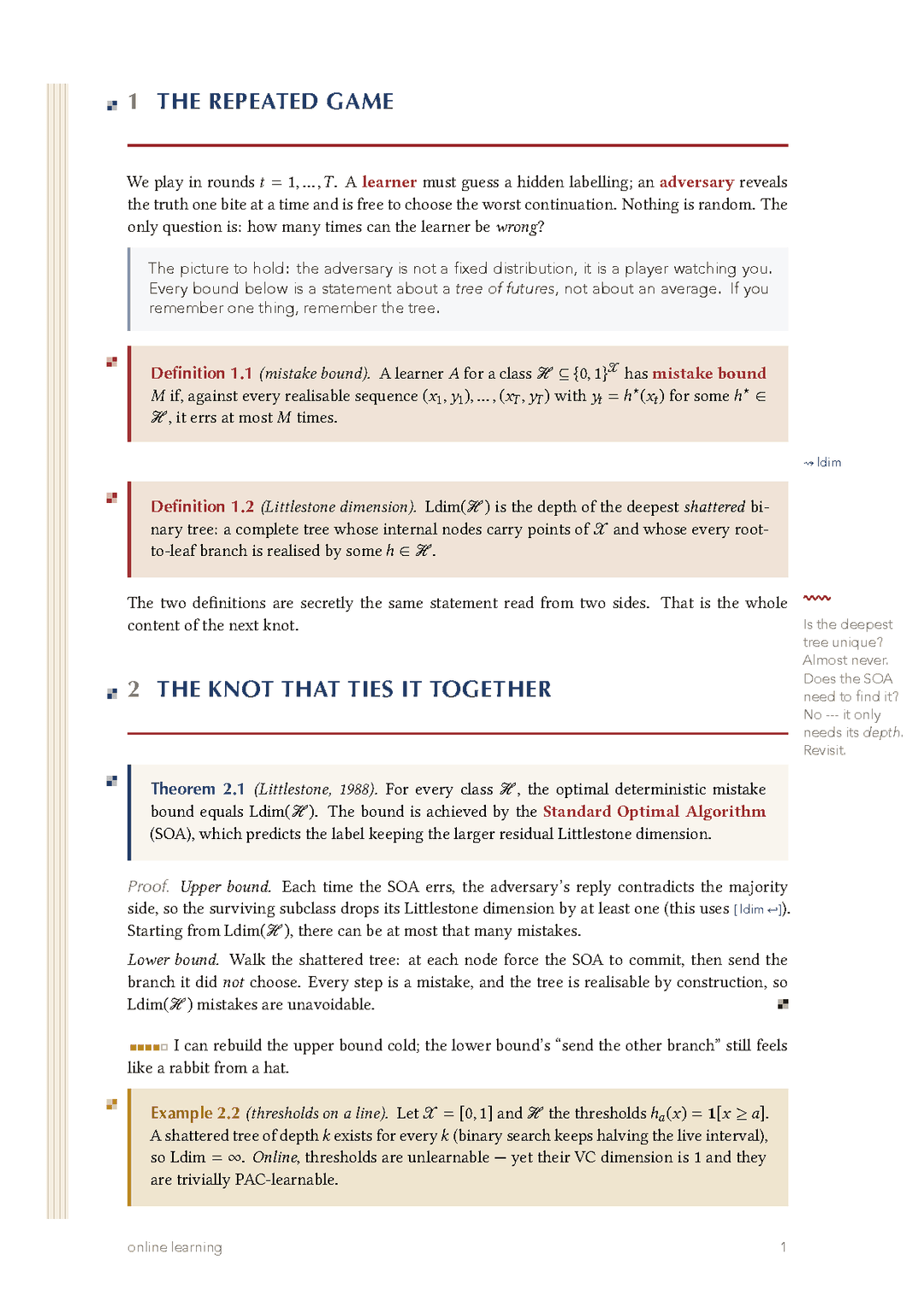 |
| Concentration of measure — theorem stated, proof left as a skeleton | Every device on one page (the demo) |
Quickstart
git clone https://github.com/Polaris-Aeterna/loom-notes.git
cd loom-notes/template
latexmk -xelatex main.tex      # or: xelatex main.tex (twice)
Then write. A blank starter, doubling as a live cheat-sheet of every command, is
in template/main.tex. Open the repo in VS Code and the
bundled .vscode/settings.json builds with XeLaTeX on
every save (LaTeX Workshop defaults to pdflatex, which fails here).
Requirements. XeLaTeX (TeX Live 2023+). Libertinus ships with TeX Live; Optima / Avenir Next / Songti / 楷体 are macOS system fonts. On other platforms, swap the three
\newfontfamilylines inloom.clsfor any display sans — everything else stays.
The toolkit (all built into the class)
| you want… | you write… |
|---|---|
| the woven cover | \loomcover{title}{sub}{author}{date} |
| a result / definition / example | theorem · definition · example (auto-styled knots) |
| the intuition voice | strand env, \whisper{…}, \keyword{…} |
| a blank to fill | \fillin[width] |
| a proof gap | \TODO{the missing step} |
| a do-it-yourself box | yourturn env + \workspace[n] ruled lines |
| how well you grok it | \warmth{0..5} |
| a margin recall prompt | \recall{question} |
| an open thread / a recurring object | \loose{…} · \warp{key} / \pick{key} |
Full reference: skill/reference/loom-commands.md.
The AI skill
skill/ is a Claude skill that turns a textbook chapter, lecture, or
paper into a finished Loom notebook: it finds the spine, drafts each section in
the Loom grammar, engineers the gaps at the right density (~70% read / 30% fill),
compiles, and verifies. See SKILL.md, and the hard-won XeLaTeX
gotchas in reference/pitfalls.md.
Examples
The first four are original expositions of public-domain mathematics — one each from linear algebra, signals, information, and optimization — safe to learn from and to share.
| the spine | |
|---|---|
examples/svd/ | the Singular Value Decomposition — "ask a matrix anything; read the answer off Σ" |
examples/fourier-transform/ | the Fourier transform — "Fourier is the eigenbasis of shift" |
examples/entropy/ | entropy — "the price of uncertainty: you can't pay less, you needn't pay more" |
examples/gradient-descent/ | gradient descent — "the rate is a tax on conditioning" |
examples/concentration-of-measure/ | concentration of measure — proof-skeleton style, organized "by engine" |
examples/nonlinear-algebra/ | nonlinear algebra, Ch. 1–2 — closely follows Michałek–Sturmfels (GSM 211); cite the book |
examples/demo/ | every visual feature on two pages |
License & credits
Code (the loom.cls class and the skill): MIT — see LICENSE. Use it,
fork it, re-dye it.
The example notebooks are study notes that restate results from their sources (cited inline). They're shared under fair-use for education; if you publish notes that closely track a copyrighted text, attribute clearly and prefer an original example. The mathematics belongs to its authors.
Woven by 北极甜虾 (Polaris), 2026. Type by Libertinus, Optima, Avenir Next. Dyes after indigo, madder, weld, and iron-gall.
// faq
What is loom-notes?
A gorgeous XeLaTeX class + Claude skill for fill-in study notes — read and fill, learn by active recall.. It is open-source on GitHub.
Is loom-notes free to use?
loom-notes is open-source under the NOASSERTION license, so it is free to use.
What category does loom-notes belong to?
loom-notes is listed under education in the Claudeers registry of Claude-compatible tools.
// embed badge

[](https://claudeers.com/loom-notes)
// retro hit counter

[](https://claudeers.com/loom-notes)
// reviews
// guestbook
// related in Education & Learning
 🔓
🔓Skills for Real Engineers. Straight from my .claude directory.
 🔓
🔓Course to get into Large Language Models (LLMs) with roadmaps and Colab notebooks.
 🔓
🔓Learn it. Build it. Ship it for others.
 🔓
🔓A collection of learning resources for curious software engineers