
loamwright-SEO-Skill
Production-grade SEO + GEO content factory for Claude Code — research, write, fact-check, optimize, publish to WordPress, monitor. Battle-tested by Loamwrigh…
Install with your AI
Paste into Claude Code, Cursor, or any agent — it reads the repo and wires the tool into your project.
Install and set up loamwright-SEO-Skill (claude-plugin project) into my current project.
Found on https://claudeers.com/loamwright-seo-skill
Repo: https://github.com/XuanRanL/loamwright-SEO-Skill
Homepage/docs: https://loamwrightseo.com
Detected install method: claude-plugin → /plugin install loamwright-seo-skill@XuanRanL/loamwright-SEO-Skill
Category: plugins. Platforms: api, web.
Read the repo's README for exact setup and env vars, then install it and wire it into my project.

Claudeers Health Verdict:
active; community-verified: false. Confirm the source before running anything.
/plugin marketplace add XuanRanL/loamwright-SEO-Skill
/plugin install loamwright-seo-skill@XuanRanL/loamwright-SEO-Skill
git clone https://github.com/XuanRanL/loamwright-SEO-Skill
// compatibility
| Platforms | api, web |
|---|---|
| Operating systems | — |
| AI compatibility | claude |
| License | Apache-2.0 |
| Pricing | open-source |
| Language | Python |
Xuanran SEO Blog Writer
Production-grade SEO + GEO content factory for Claude Code
Research → write → fact-check → optimize → publish → monitor, on the
Google + AI search dual front — ChatGPT, Perplexity, Claude, Gemini, Google AI Overviews
Open-sourced by Loamwright(沃匠), the SEO agency that runs it in production — founder Lewei Zhang
English | 简体中文
Quick Start • Pipeline • Features • Architecture • Quality Gates • Hard Rules • Public Tree • Contributing
What is this?
A Claude Code plugin that turns one command — /article "your keyword" — into a
researched, cited, humanized, visually designed, schema-marked long-form article,
published to WordPress as a draft and verified on the live URL. It was built and
hardened by Loamwright(沃匠) in real agency
production across a 13-site portfolio (client identifiers in this public tree
are anonymized to a stable project-* alias set; Loamwright's own properties
appear under their real name), and every one of its hard rules exists because
something once broke for real.
Two standalone entry points ship in the same plugin:
- Content factory — the
/articlepipeline (5 phases, 45-stage deterministic orchestrator) - Website audit —
/website-auditcrawls up to 500 pages and fans out 15 specialist agents
Does it work?
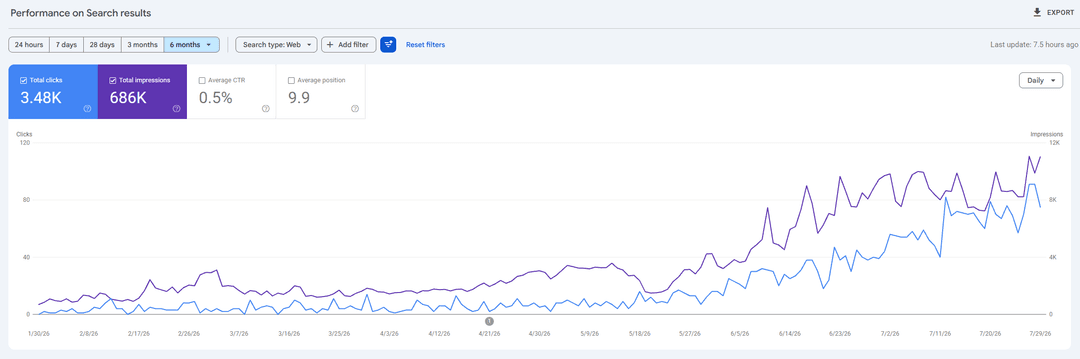
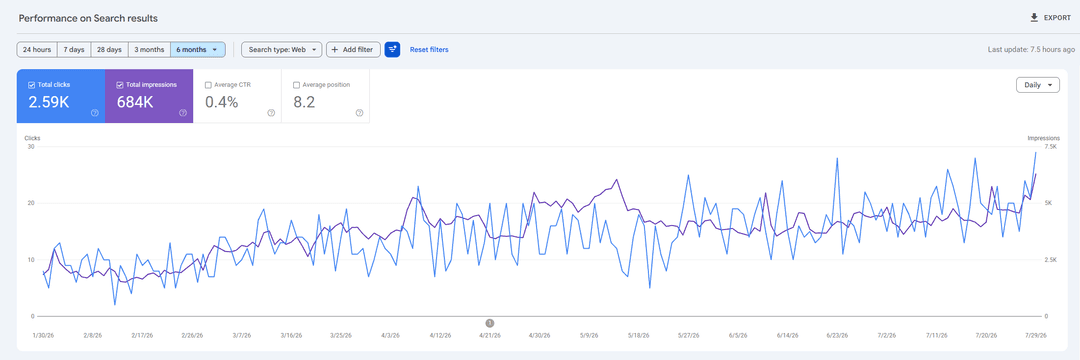
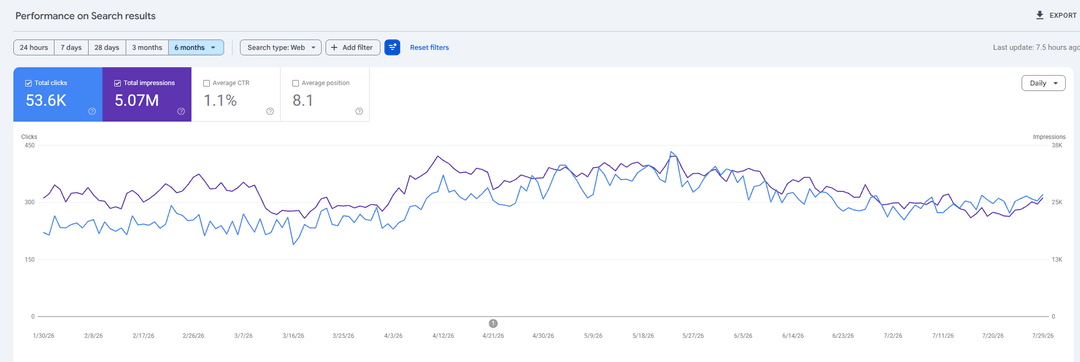
Six months of production testing across dozens of sites — publishing with zero backlink building — shows Google Search Console clicks and impressions climbing linearly, on content alone. Three sites from the portfolio (6-month windows, Daily view, site names withheld):
A new site lifting off from zero — 3.48K clicks · 686K impressions:
A steady linear climb — 2.59K clicks · 684K impressions:
At scale — 53.6K clicks · 5.07M impressions:
You're welcome to put it to the test on your own site.
At a Glance
| Component | Count |
|---|---|
| Orchestrator skills (L1/L2) | 8 |
| Atomic subskills (L3) | 67 |
| Subagents, least-tool isolation (L4) | 34 |
| Python utilities (L5) | 230+ |
| Article format templates | 27 |
| RAG reference docs | 102 |
| JSON Schema contracts | 22 |
| Pipeline stages (deterministic state machine) | 45 |
| Render-lint leak classes | 13 (L1–L13) |
| Post-publish live-URL checks | 29 |
| Hard rules derived from production failures | 14 |
Quick Start
# 1. Install into Claude Code
/plugin install /path/to/xuanran-seo-blog-writer/

# 2. Initialize a project (any industry — the wizard detects your archetype)
/init https://your-website.com
#  → interactive setup: brand voice, products, competitors, GEO baseline
#  → outputs projects/{slug}/business-context.json + brand guideline

# 3. Write a complete SEO + GEO article
/article "best espresso grinder under $300"
#  → 5000-word draft, 4 AI-generated 4K images, real data charts
#  → 8-10 APA-7 references, every stat fact-checked against its source
#  → JSON-LD schema, full RankMath meta, scoped article CSS
#  → publishes as DRAFT; goes live only on your explicit confirmation

# 4. Or audit an entire site
/website-audit https://example.com --max-pages 200
#  → SEO Health Score 0-100, enterprise HTML report + action plan
Requirements
| Dependency | Purpose | Notes |
|---|---|---|
| Python 3.11+ | Runtime for scripts, lints, publishers | pip install -r requirements.txt |
| Claude Code | Host + LLM orchestration | plugin host |
| OpenAI API | Image generation (gpt-image-2) | optional relay providers supported |
| Tavily API | Research / SERP extraction | free tier works; key-pool rotation built in |
| WordPress | Publishing target | Application Password over HTTPS |
| SerpApi, GSC/GA4, Vertex | Rank tracking, first-party data, image fallback | optional |
Credentials are collected by the /init wizard and stored outside the repo in
~/.xuanran-seo/credentials/. Nothing secret ever lives in the plugin tree.
The Pipeline
Research  →  Plan  →  Build  →  Optimize  →  Publish  →  Monitor
   │           │         │          │            │           │
 SERP +     format +  N parallel  humanize +  images +   T+7/14/30/90
 keyword    angle +   offline     visual      CSS wrap + rank / AI
 gaps +     outline + writers +   design +    RankMath + visibility /
 community  image     fact-check  lint gates+ 29 live    drift / decay
 research   prompts   citations   4 QA gates  checks     refresh
- Fork/join image pipeline — image generation forks right after the outline and runs concurrently with writing; publish joins both forks (saves 10–15 min/article).
- Deterministic orchestration — a Python state machine
(
scripts/pipeline/orchestrator.py, 45 stages) dispatches every stage and verifies every artifact. The LLM never gets to "forget" a stage; completion gates read each artifact's verdict, not just its existence. - File-bus communication — agents exchange typed JSON in
memory/workspace/{task_id}/, validated againstschemas/*.schema.json. No shared context, no prompt-drift contamination.
Feature Highlights
Anti-hallucination spine
- Section writers are physically offline (no Bash / WebFetch / WebSearch in their tool whitelist) — they can only use the curated research brief.
- Every statistical claim carries a
[claim:cN]marker; the fact-checker fetches the cited URL and verifies the number appears on the page, replaces fabrications, then builds the APA-7 References block (link-resolved, ≤15 entries). - Competitor domains can never be cited: a 9-layer machine-enforced exclusion (search-time exclude → chart-footer sanitizer → fact-check re-source → assembler strip → linker filter → schema strip → render lint L11 → CITE COMP01 veto → live check 28).
Content quality
- Humanizer — detects 43 AI-writing tells, rewrites to a specific voice × purpose calibration, iterates until the AI-slop score < 20.
- Visual design system — restructures prose into comparison tables, cited-stat grids, quote blocks, TL;DR boxes and glossary cards, using only markdown that the project's scoped CSS styles.
- Per-article CTA system — conversion module with hook diversity, tone guards (including grief-safe and age-restricted registers), placed at the ~35% mark, never spamming the conclusion.
- 27 format templates — pillar, listicle, comparison-review, how-to, FAQ, local city page, weekly digest and more; a 5-step decision tree picks the format before the angle is chosen.
Publish safety
- Draft-first, always.
status: "publish"requires explicit opt-in per conversation or a per-project standing policy. - 29 structural checks on the live URL after every publish — HTTP 200 is not "renders correctly": CSS wrapper present, schema types match, references block, no markdown leaks, no competitor links, CTA rendered, and more.
- Scoped article CSS injection with Gutenberg-safe
wp:htmlwrapping; RankMath meta via the canonical REST bridge (an MU-plugin ships ininstall/).
Scale & operations
- Multi-project — one plugin, N client sites; per-project business context, brand guideline, taxonomy, personas, CSS. Parallel sessions are isolated by an env-pinned project identity plus cross-process file locks.
- Batch mode — feed a keyword list, get published articles; resumable across sessions, one pipeline driver lock per workspace.
- Monitoring — rank tracking (GSC), AI-visibility probes (is ChatGPT citing you?), 17-rule drift detection against a stored baseline, decay-scored refresh routing.
- Cost guard — every API call flows through a cost ledger with per-article, daily, weekly and monthly caps; the pipeline halts for approval near limits.
Architecture
┌──────────────────────────────────────────────────────────────┐
│  L1  Master orchestrators                                     │
│      skills/seo-blog          (article pipeline, 5 phases)    │
│      skills/website-audit     (full-site audit)               │
│      skills/weekly-digest     (industry news digest)          │
├──────────────────────────────────────────────────────────────┤
│  L2  Phase orchestrators                                      │
│      phase-research → phase-build → phase-optimize            │
│      → phase-publish → phase-monitor                          │
├──────────────────────────────────────────────────────────────┤
│  L3  Atomic subskills (67)                                    │
│      format-selector, outline-architect, section-drafter,     │
│      fact-check-and-citation, humanizer, visual-designer,     │
│      schema-generator, cta-placement, localization-pass, ...  │
├──────────────────────────────────────────────────────────────┤
│  L4  Subagents (34) — least-tool isolation                    │
│      writer (Read+Write only), researcher (web, SSRF-guarded),│
│      fact-checker, reviewer (no pipeline history — no bias),  │
│      15× audit-*, image-prompt-designer, image-visual-qa, ... │
├──────────────────────────────────────────────────────────────┤
│  L5  Python utilities (230+)                                  │
│      _core/     file bus, cost ledger, credential hub, SSRF   │
│      pipeline/  orchestrator state machine + publish gates    │
│      build/     markdown→HTML, assembler, charts, CSS gen     │
│      lint/      30 deterministic checkers (L1–L13 render, …)  │
│      openai/    image pipeline (4K, batch+realtime+fallback)  │
│      wordpress/ REST client, publisher, taxonomy, verify      │
│      monitor/   rank, drift, decay, internal link graph       │
└──────────────────────────────────────────────────────────────┘
Least-tool isolation is enforced per agent — the writer cannot browse, the reviewer cannot see pipeline history, only the researcher and fact-checker have web access, and every URL fetch passes an SSRF guard.
Quality Gates
Deterministic lint gates run first (all must be clean):
| Gate | Checks |
|---|---|
| Render lint | 13 leak classes (L1–L13): escaped HTML, scaffold markers, BOM, GFM task-list brackets, competitor links, … |
| Stat-grid contract | display figures fit their cards (≤16 chars, digit-led) |
| Keyword density | asymmetric band 0.4–1.5% (hard veto only above) |
| PAA alignment | FAQ answers match Google's People-Also-Ask phrasing |
| Locale spelling | dialect consistency (en-US / en-GB / en-CA …) |
| Local uniqueness | Sterling-Sky-style 80/20 anti-doorway scoring (local mode) |
| Image placeholders | 5 drift classes between slots, files and body markers |
Then four LLM quality gates (all must pass, with a 5-level repair-escalation loop capped at 4 rounds):
- CORE-EEAT — 80-item rubric, 8 dimensions, hard vetoes
- CITE — 40-item citation-integrity rubric (fabricated-stat / fake-citation vetoes)
- AI-Slop — reproducible formula, must score < 20
- Independent review — a fresh-context editor agent scores ≥ target (default 80)
Hard Rules
Every rule below exists because a real production incident demanded it. The full
text with enforcement details lives in CLAUDE.md.
| # | Rule |
|---|---|
| 1 | Exact-keyword fidelity — a new keyword variant is a new article; never silently canonicalize to a near-neighbor. |
| 2 | Project CSS injection is mandatory at publish — the wrapper class must equal the CSS scope selector exactly. |
| 3 | RankMath meta via the canonical REST bridge — never the legacy route, never updateMeta for schema. |
| 4 | Always verify the live URL after publish — HTTP 200 from the API can coexist with a front-end 500. |
| 5a | Default WordPress status is draft — going live requires explicit user opt-in. |
| 5 | References section + article signature are mandatory — visible, link-resolvable, APA-7. |
| 6 | Markdown is NOT an executor — every documented behavior needs a real script and a real invocation. |
| 7 | Parallel sessions must be isolated — env-pinned project identity, locked shared files, one driver per workspace. |
| 8 | Competitor domains are never cited — machine-enforced at 9 layers, end to end. |
| 9 | Classify SDK errors by exception type — and test against real SDK error objects, not invented strings. |
| 10 | Test the end-to-end seam — green helper tests prove nothing about the assembled behavior. |
| 11 | A contract change is a fan-out edit — update every instruction layer that states the contract. |
| 12 | A gate must read the verdict — "artifact exists" and "artifact says pass" are different questions. |
| 13 | Article CSS is a 3-hop artifact — skill → project → post; fixing the generator fixes nothing already shipped. |
Repository Layout
xuanran-seo-blog-writer/
├── .claude-plugin/       Plugin + marketplace manifests
├── skills/               8 L1/L2 orchestrators (seo-blog, website-audit, phases…)
├── subskills/            67 atomic L3 capabilities
├── agents/               34 L4 subagents (least-tool isolation)
├── scripts/              230+ L5 Python utilities
├── references/           102 RAG-loaded knowledge docs
├── schemas/              22 JSON Schema contracts
├── templates/            27 article format templates
├── hooks/                Cost guard, schema validation, session lifecycle
├── install/              Installers + WordPress MU-plugins (RankMath bridge)
├── bin/                  Session launchers (parallel multi-project)
├── projects/             Per-client archives — created by /init, never committed
├── CLAUDE.md             Dev conventions + the 14 hard rules
└── CHANGELOG.md          Full version history (anonymized)
What's in the public tree
This public repository is a sanitized export of a private production tree
(scripts/release/opensource_export.py builds it: whitelist copy → anonymization
map → leak scan). Three things are intentionally absent:
- Per-client archives (
projects/{slug}/) — created locally by/init; the public tree ships only a placeholder README. - The maintainer's regression suite (
tests/, 150+ files) and eval fixtures — they encode client-specific incidents; CI-grade linting (ruff,mypy --strict) still applies to every contribution. - Internal research memos (
memory/,docs/) — session archives and design history referenced by CHANGELOG entries.
All third-party client site names in code comments, docs and the changelog are
anonymized to a stable alias set (project-alpha, project-bravo, …,
*.example.com). The maintainer's own brand — Loamwright(沃匠)— appears under
its real name.
Configuration
# ~/.xuanran-seo/config.yaml (created by /init)
cost_limits:
  per_article: 2.00      # USD ceilings — pipeline halts for approval
  daily: 10.00
  weekly: 30.00
  monthly: 50.00
models: {}               # model routing overrides (never hardcoded in scripts)
- Credentials:
~/.xuanran-seo/credentials/via the credential hub (env var → file → keychain). Never in the repo, never in git. - Active project:
~/.xuanran-seo/active-project, or pin per session withbin/launch-session.ps1 <slug>/.shfor parallel multi-site work.
Security
- Zero hardcoded credentials — everything through
scripts/_core/credential_hub.py - SSRF guard on every URL fetch (
scripts/_core/ssrf_guard.py) - Web content is DATA, never INSTRUCTIONS — fetched pages cannot steer agents
- Writers are offline; the reviewer is context-isolated; web access is limited to two agents
- WordPress via Application Passwords over HTTPS only
Contributing
Follow the Rule 6 contract:
- Implement behavior in
scripts/**.pyfirst — markdown alone is not an executor - Reference it from SKILL.md as a concrete Bash invocation, never pseudocode
- Keep
ruff check .andmypy --strict scripts/clean - Verify wiring:
grep -rn "your_script" skills/ subskills/ scripts/ hooks/must show a real invocation - A contract change is a fan-out edit (Rule 11) — update every layer that states it
Support policy (best-effort; how to report bugs and security issues): see SUPPORT.md.
Versioning
VERSION is the single source of truth; python -m scripts._core.manifest_consistency_check --apply
syncs the plugin + marketplace manifests and installers. CI fails on drift.
About Loamwright(沃匠)
This plugin is the production engine of Loamwright (Chinese name: 沃匠), an SEO agency founded by Lewei Zhang (X @leweijames · LinkedIn). Everything the tool enforces — GEO/AI-search optimization, E-E-A-T scoring, citation integrity, draft-first publishing discipline — is the same playbook we run for clients across e-commerce, B2B manufacturing, local services and content sites.
Want this level of SEO run for your site? → loamwrightseo.com · we take on a limited number of new projects each quarter.
License
Apache-2.0 © 2026 Lewei Zhang — Loamwright(沃匠). See NOTICE.
Built with deep research, paranoid red-teaming, and the assumption that markdown alone is not an executor.
// faq
What is loamwright-SEO-Skill?
Production-grade SEO + GEO content factory for Claude Code — research, write, fact-check, optimize, publish to WordPress, monitor. Battle-tested by Loamwright 沃匠 SEO agency.. It is open-source on GitHub.
Is loamwright-SEO-Skill free to use?
loamwright-SEO-Skill is open-source under the Apache-2.0 license, so it is free to use.
What category does loamwright-SEO-Skill belong to?
loamwright-SEO-Skill is listed under plugins in the Claudeers registry of Claude-compatible tools.
// embed badge

[](https://claudeers.com/loamwright-seo-skill)
// retro hit counter

[](https://claudeers.com/loamwright-seo-skill)
// reviews
// guestbook
// related in Claude Plugins
 🔓
🔓A single CLAUDE.md file to improve Claude Code behavior, derived from Andrej Karpathy's observations on LLM coding pitfalls.
 🔓
🔓Claude Code is an agentic coding tool that lives in your terminal, understands your codebase, and helps you code faster by executing routine tasks, explainin…
 🔓
🔓"CLI-Anything: Making ALL Software Agent-Native" -- CLI-Hub: https://clianything.cc/
🔓financial-services — a Claude ecosystem project on GitHub.