
cinematic-film
Claude Code skill: turn any subject into a cinematic animated film with Remotion + three.js, gpt-image assets, a rigged TTS narrator and synthesized sound.
Install with your AI
Paste into Claude Code, Cursor, or any agent — it reads the repo and wires the tool into your project.
Install and set up cinematic-film (claude-skill project) into my current project.
Found on https://claudeers.com/cinematic-film
Repo: https://github.com/minosdevs/cinematic-film
Homepage/docs: —
Detected install method: claude-skill → # copy this skill into .claude/skills/cinematic-film/
Category: skills. Platforms: cli, web.
Read the repo's README for exact setup and env vars, then install it and wire it into my project.

Claudeers Health Verdict:
unknown; community-verified: false. Confirm the source before running anything.
# copy the skill dir into your project:
# .claude/skills/cinematic-film/   (or ~/.claude/skills/cinematic-film/ for all projects)
git clone https://github.com/minosdevs/cinematic-film
// compatibility
| Platforms | cli, web |
|---|---|
| Operating systems | — |
| AI compatibility | claude |
| License | MIT |
| Pricing | open-source |
| Language | TypeScript |
cinematic-film
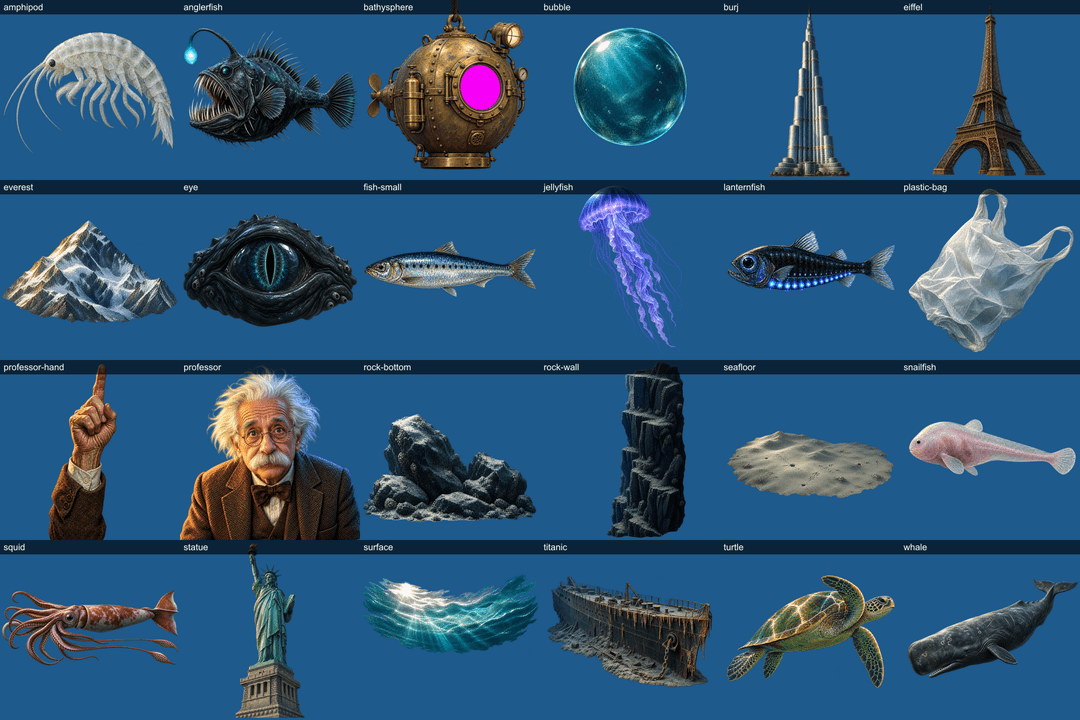
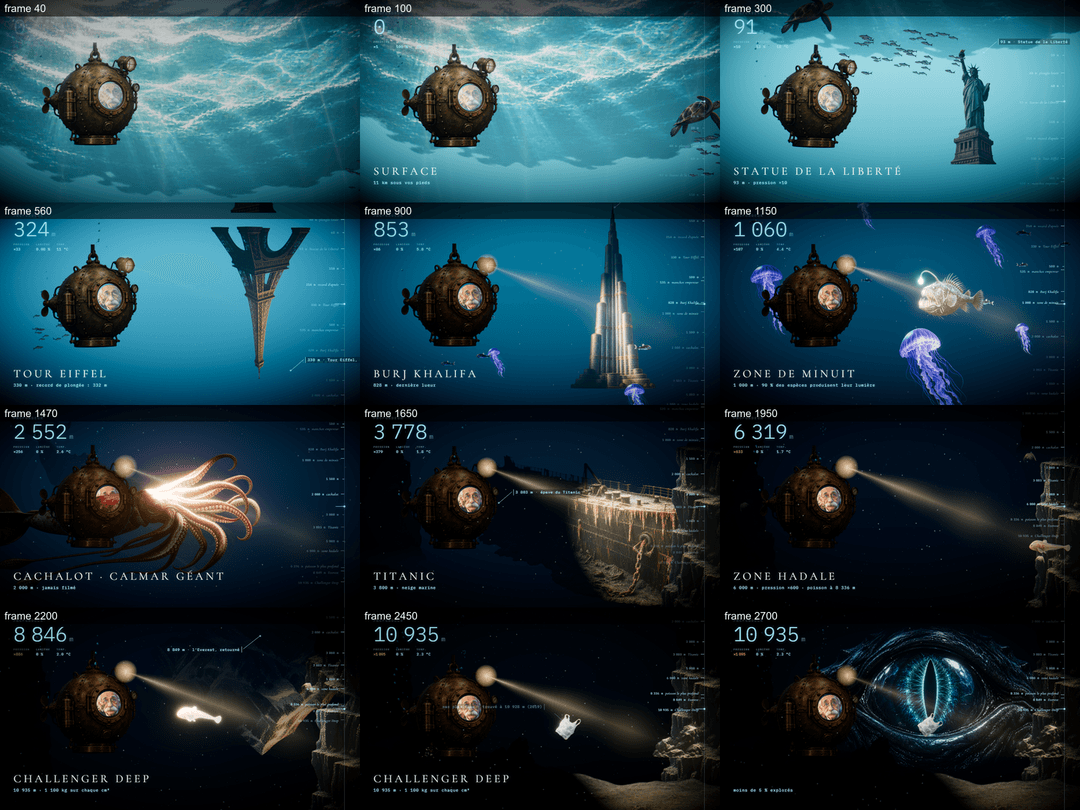
A Claude Code skill that turns a subject into a short cinematic animated film (60–120 s) with Remotion + three.js: painted assets generated with gpt-image and cut out, a rigged narrator whose mouth follows the voice, TTS voice-over, royalty-free synthesized music and sound effects, a continuous one-shot camera, real fog / lights / particles, bloom + grain post-processing, and a data HUD (counter, readouts, ruler, 3D-anchored labels).
It was built while producing Abysses, a 94 s descent from the surface to the Challenger Deep, narrated by an
Einstein-like professor in a brass bathysphere. The full example lives in templates/example-abysses/.
Install
# as a Claude Code skill (user-wide)
git clone https://github.com/minosdevs/cinematic-film ~/.claude/skills/cinematic-film
Requirements on the machine: Node 20+, ffmpeg/ffprobe on the PATH, an OPENAI_API_KEY (gpt-image-2.5 for
assets, gpt-4o-mini-tts for the voice). A GPU helps but is not required (--gl=swangle).
Then, in Claude Code, ask for a film: "a 90 s mysterious, educational video about the layers of the atmosphere, narrated by an old aviator". The skill triggers on requests for a high-quality narrative video, a documentary-style explainer, a journey / descent / timeline with facts per level, or anything that must not look like a slideshow.
What is inside
| path | role |
|---|---|
SKILL.md | the workflow Claude follows: brief → script & timeline → assets → audio → staging → headless stills → render |
scripts/ | pipeline: setup.mjs (scaffold), gen-assets.mjs, contact-sheet.mjs, process-assets.mjs, gen-vo.mjs, build-timeline.mjs, make-audio.mjs, stills.mjs |
templates/base/ | the generic engine: continuous camera, environment by progress, Sprite3D (swim / jelly / squid / flag / breathe shaders), rigged Narrator, particles, light rays, imperative post-processing, config-driven HUD |
templates/example-abysses/ | the complete source of the example film (script, asset manifest, choreography) |
references/ | wow.md (what makes it cinematic instead of a collage), pitfalls.md (headless rendering traps), prompts.md (gpt-image prompt patterns), example-abysses.md |
Pipeline in five commands
node <skill>/scripts/setup.mjs ../my-film --name "Title"      # scaffold + npm install
node scripts/gen-vo.mjs ash && node scripts/build-timeline.mjs ash 1.06   # voice -> timeline.json
node scripts/gen-assets.mjs && node scripts/process-assets.mjs            # painted cutouts -> meta.json
node scripts/make-audio.mjs                                               # music + sfx synced to the timeline
node scripts/stills.mjs --sheet && npx remotion render Film out/film.mp4 --gl=angle
Everything that changes with the subject lives in three places: scripts/vo-script.json (lines, labels,
values, events), scripts/assets.json + process.json (what to paint, how to cut it), and
src/film.config.ts + src/scene/Story.tsx + src/tags.ts (camera, mood, staging, labels).
Two things worth knowing before touching the engine
- In headless rendering, Remotion draws one three.js frame per image. Anything that arrives after the
first React commit (a texture, a post-processing pass) is never drawn. The engine therefore builds the
postprocessingcomposer imperatively, preloads textures and audio before mounting the canvas, and keeps aReadvancesafety net. Do not replace these with the declarative wrappers. pow(x, k)with a slightly negativexin a shader yields NaN, and bloom spreads a NaN into a hard-edged black block. Alwayspow(max(0.0, x), k).
License
MIT
// faq
What is cinematic-film?
Claude Code skill: turn any subject into a cinematic animated film with Remotion + three.js, gpt-image assets, a rigged TTS narrator and synthesized sound.. It is open-source on GitHub.
Is cinematic-film free to use?
cinematic-film is open-source under the MIT license, so it is free to use.
What category does cinematic-film belong to?
cinematic-film is listed under skills in the Claudeers registry of Claude-compatible tools.
// embed badge

[](https://claudeers.com/cinematic-film)
// retro hit counter

[](https://claudeers.com/cinematic-film)
// reviews
// guestbook
// related in Claude Skills
 🔓
🔓An agentic skills framework & software development methodology that works.
 🔓
🔓 🔓
🔓💫 Toolkit to help you get started with Spec-Driven Development
 🔓
🔓AI coding assistant skill (Claude Code, Codex, OpenCode, Cursor, Gemini CLI, and more). Turn any folder of code, SQL schemas, R scripts, shell scripts, docs,…